
Your Helmet Isn't Enough: UV Protection for Cyclists in Australia
Cycling in Australia means epic rides and harsh sun. Your helmet protects your head, but what about your face, neck, and ears? Learn how to guard against UV damage.
Your Helmet Isn't Enough: UV Protection for Cyclists in Australia
Australia. The land of sunburnt country, epic cycling routes, and relentless UV radiation. You’ve done the smart thing and wear a helmet. Good on ya. But is that helmet truly protecting you from the sun’s damaging rays? For most cyclists, the answer is a resounding 'no'.
While your helmet is a vital piece of safety gear for protecting your noggin in a crash, it offers minimal protection against direct UV exposure, especially on your face, neck, and ears. In Australia, this is a serious oversight with potentially long-term health consequences. We’re talking about premature aging, sunburn, and a significantly increased risk of skin cancer. Let’s talk practical solutions.
The Harsh Reality of Australian UV
Australia consistently ranks among the countries with the highest UV levels globally. The UV Index, the measure of ultraviolet radiation, frequently hits 'Extreme' (11+) during daylight hours, particularly during the summer months. Even on partly cloudy days, UV rays can penetrate the clouds, leaving you exposed. If you’re cycling during these periods, particularly between 10 am and 3 pm when the sun is at its strongest, you’re essentially bathing your exposed skin in harmful radiation.
Think about your typical ride. You’re out there for an hour, maybe two, maybe more. Your face is directly exposed. The tops of your ears? Exposed. The back of your neck, especially if you have a shorter jersey or a windbreaker?
Exposed. Even if you’re cycling in the shade of trees, UV rays can reflect off surfaces like roads and water, meaning you’re still getting a dose of radiation.
The common misconceptions we hear from cyclists:
“My sunglasses protect my eyes, so I’m fine.” Sunglasses are great for eye health and comfort, but they don’t protect your skin. They also don’t shield your forehead, cheeks, or nose.
“I only ride early in the morning or late in the afternoon.” While this reduces exposure, UV rays are still present, especially during peak UV times, and can bounce off surfaces. Plus, Australian daylight hours, particularly in summer, are long.
“I’ve never burned while cycling, so I’m not at risk.” Sunburn is a sign of acute damage, but UV damage accumulates over time. You might not see the burn, but the long-term damage to your skin cells is still happening.
“I’m of naturally darker skin, so I don’t need to worry as much.” While darker skin has more melanin and offers some natural protection, it doesn’t make you immune to UV damage or skin cancer. Medical professionals still strongly advise sun protection for all skin types.
Beyond the Burn: The Real Risks
Sunburn is the immediate, painful consequence of excessive UV exposure. But the damage goes much deeper:
Premature Aging: UV radiation breaks down collagen and elastin in your skin, leading to wrinkles, age spots, and leathery skin. That ‘weather-beaten’ look might seem tough, but it’s actually sun damage.
Actinic Keratoses (Pre-cancers): These are rough, scaly patches that can develop on sun-exposed skin. They are considered precancerous and have the potential to develop into squamous cell carcinoma.
Skin Cancers: The most serious risk. This includes basal cell carcinoma, squamous cell carcinoma, and the potentially deadly melanoma. The face, ears, and neck are common sites for these cancers, precisely the areas most exposed during cycling.
Eye Damage: While you might wear sunglasses, prolonged UV exposure can contribute to cataracts and other eye conditions, even with glasses on.
Heatstroke: While not a direct UV risk, cycling in the Australian sun, particularly in higher temperatures, increases the risk of heatstroke. Proper sun protection can help you stay cooler.
Helmets and UV: The Missing Link
Standard cycling helmets are designed for impact protection, not sun shielding. They have few, if any, features that adequately protect your face, ears, or the back of your neck from direct sunlight. The small visors on some MTB helmets offer minimal protection to the eyes and bridge of the nose, but leave most of your face and neck vulnerable.
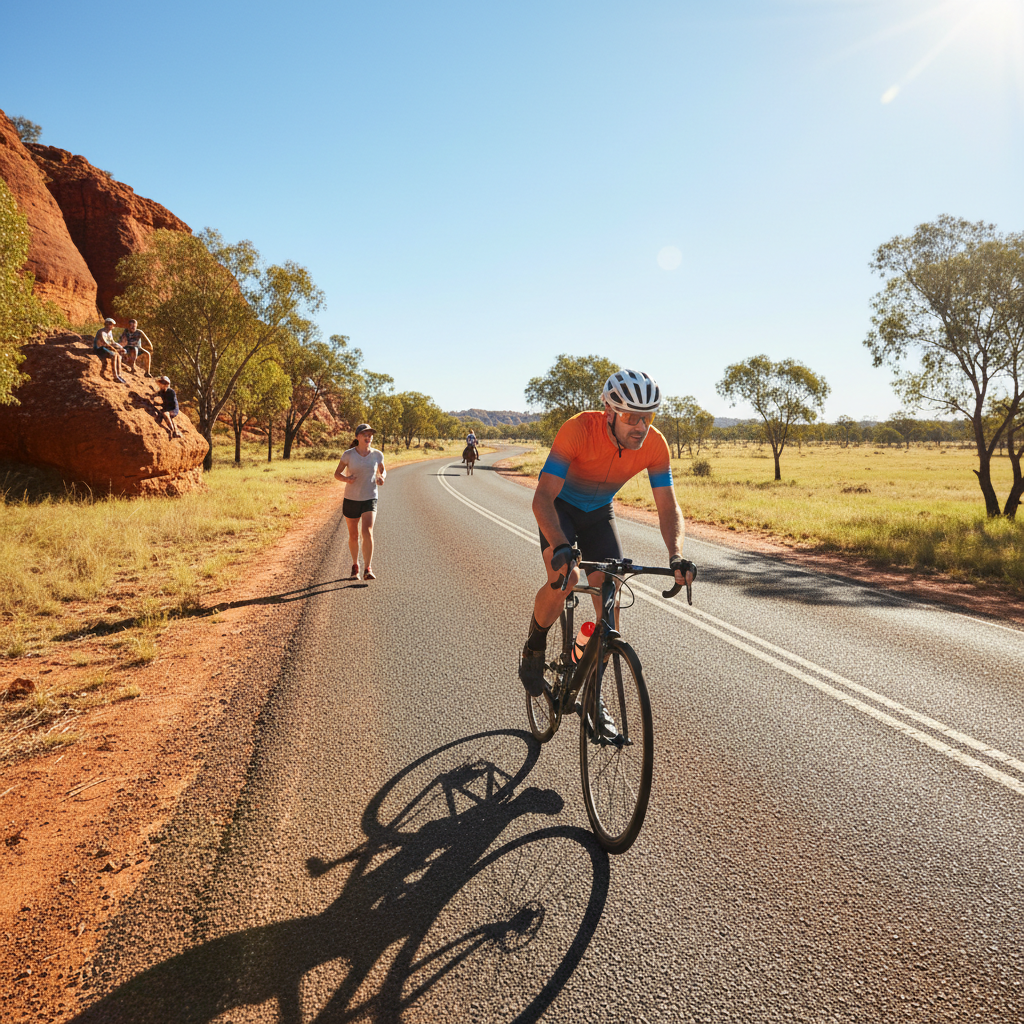
Imagine this: You're out on a long road ride, the sun beating down from directly overhead. Your helmet provides shade for the very top of your head, but your forehead, cheeks, and neck are fully exposed. The sun’s rays hit your skin, causing damage that you might not feel immediately, but that accumulates over time.
Practical UV Protection for Cyclists
So, what do you do? You can't just stop cycling. The solution lies in combining your existing safety gear with effective sun protection strategies. This is where adding a dedicated sun brim to your helmet comes into play.
Unlike the tiny visors on some helmets, a proper sun brim extends significantly further, casting shade over your entire face, including your nose, cheeks, and even the tops of your ears. It’s a simple addition that makes a massive difference.
The Checklist for Sun-Smart Cycling
Here’s your no-nonsense checklist for staying safe under the Australian sun while you ride:
Wear a Helmet with a Brim: This is your primary line of defence for your face. Ensure it extends far enough to cover your key exposed areas. Explore our range of Products designed specifically for this purpose.
Sunscreen is Non-Negotiable: Apply a broad-spectrum, high SPF (30+, preferably 50+) sunscreen to all exposed skin before you ride. Don't forget your ears, neck, and the back of your hands. Reapply every two hours, or more often if you’re sweating heavily.
Wear Sunglasses: Tinted, UV-blocking sunglasses protect your eyes and the skin around them. Look for labels that confirm UV protection.
Cover Up: Consider long-sleeved, lightweight cycling jerseys made from UPF-rated fabric. They offer a barrier against UV rays. A neck gaiter or bandana can protect your neck and lower face.
Choose Your Riding Times Wisely: If possible, plan longer rides for early morning or late afternoon. However, always apply sun protection regardless.
Stay Hydrated: While not direct UV protection, staying hydrated is crucial for regulating body temperature, especially when cycling in hot Australian conditions.
Check the UV Index: Be aware of the UV forecast for your area and adjust your plans accordingly. You can usually find this on weather apps or meteorological sites.
Integrating a Sun Brim: Step-by-Step
Adding sun protection to your helmet shouldn't be complicated. For many helmets, a simple accessory brim is the easiest solution. Here’s how it generally works:
1. Choose the Right Brim: Select a brim designed to fit your helmet type. We offer solutions that are compatible with many popular helmet models. Check out our Products to find the best fit.
2. Installation: Most brims attach using a secure fastening system, often a strong Velcro or clip mechanism. Our How to Install guide provides clear, step-by-step instructions.
3. Test the Fit: Ensure the brim is securely attached and doesn’t obstruct your vision or interfere with the helmet’s fit. It should sit firmly in place even in windy conditions.
4. Adjust Your Routine: Make applying sunscreen a habit before you even put your helmet on. sunscreen and a brim work best together.
Common Objections Handled
"It looks silly." We get it. Aesthetics matter to some. But ask yourself: what looks worse? A cyclist with a stylishly effective sun brim, or someone with sunburnt, prematurely aged skin, or worse, melanoma? Functionality and health should always trump fleeting fashion.
"It will make my helmet too hot." Modern brims are designed to be lightweight and allow for airflow. They don't significantly impede ventilation. In fact, by reducing direct sun hitting your head and face, they can actually help you feel cooler. Plus, they don’t add bulk like a full hat would underneath your helmet.
"It will fall off." If you choose a quality product and install it correctly, this isn't an issue. Our designs prioritize secure attachment. Check our FAQ for details on durability and security.
"I'm only riding 20 minutes, I don't need it." Remember that UV damage is cumulative. Even short, frequent exposures add up over a lifetime. It's about building healthy habits for the long haul.
Don't Wait Until It's Too Late
Australian cycling is a joy, but it demands respect for the sun. Your helmet is crucial for safety in a crash, but it’s only one part of your protective gear. Don't let an oversight in sun protection undermine your health. Investing in a good sun brim for your helmet, using sunscreen religiously, and adopting other sun-smart habits are essential steps for any cyclist in Australia.
For more tips and information, browse our Products and check out the rest of our Blog for further insights.
Ride smart, ride safe, and ride sun-protected.