
UV Reflection Off Rocks: The Invisible Threat to Your Helmeted Head
Climbers and outdoor enthusiasts, listen up. That rock you're scaling isn't just providing grip; it's a cunning accomplice in sun damage. Learn how UV reflects off rock surfaces, amplifying your risk, and how to stay protected.
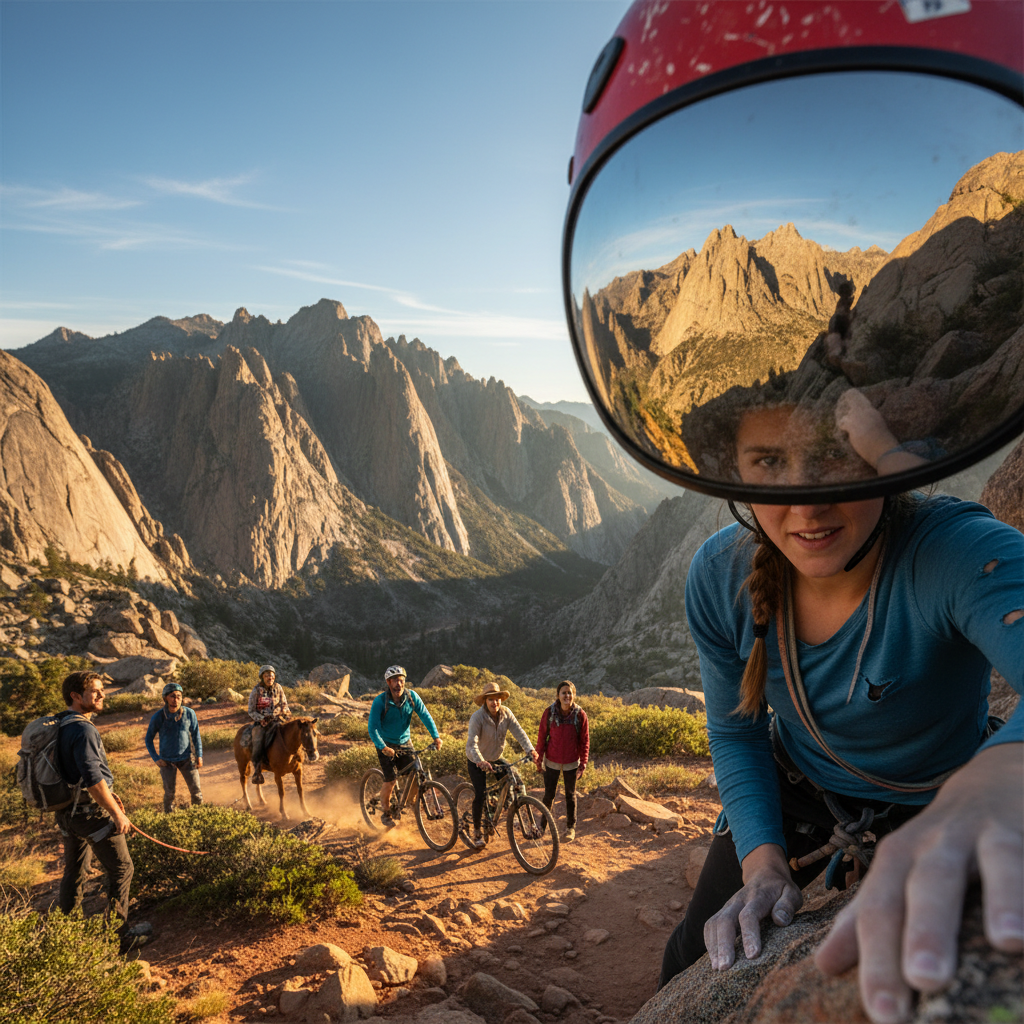
UV Reflection Off Rocks: The Invisible Threat to Your Helmeted Head
Alright, let's cut to the chase. You're wearing a helmet. Good. That's step one for safety in climbing, construction, or any activity where head impacts are a risk. But what about the sun? You're likely thinking your helmet has you covered. Think again. The biggest overlooked threat for helmet wearers in the Australian sun isn't just direct UV rays – it's the sneaky, amplified UV that bounces off surfaces around you.
And for climbers, builders, or anyone working and playing outdoors on rock, that reflection is a serious problem.
The Australian Sun: No Joke
Australia consistently ranks among the highest UV radiation levels globally. Even on cloudy days, up to 80% of UV rays can penetrate. During summer months, the UV Index frequently hits extreme levels (11+). Long days mean extended exposure. We sweat more, we push harder, and we often underestimate the cumulative damage happening, all while our helmets provide a false sense of complete protection.
How UV Reflection Works
UV (Ultraviolet) radiation from the sun hits a surface and can either be absorbed or reflected. Different surfaces reflect UV at different rates. While white surfaces are known for high reflectivity (think snow, sand), many natural surfaces, especially rock, are also significant UV reflectors. This means the UV energy doesn't just hit you directly; it bounces off the rock, often multiple times, creating a more intense and pervasive exposure than you'd expect.
Why Rock is a Problem
Surface Type: The composition of rock varies, but many types, especially lighter-coloured or crystalline rocks, are highly reflective. Think granite, sandstone, and even dry, dusty soil. The rougher texture can scatter UV rays, making them hit you from multiple angles.
Angle of Incidence: When the sun is at an angle the rock face, the reflected rays can bounce directly into areas not shaded by your helmet – your neck, ears, and face.
Proximity: You're often close to rock walls when climbing. This proximity means the reflected UV is intense and concentrated.
Cumulative Exposure: Imagine yourself on a climb. You're exposed to direct sun, and then to reflected UV from the wall in front of you, the ledge you're standing on, and even the ground. It all adds up rapidly.
The Hidden Danger: UV and Your Helmet
Your helmet is designed for impact protection. While some helmets have a brim, this is often too small to offer significant shade from the intense Australian sun, especially when reflecting off surfaces. The primary risk isn't the helmet itself failing; it's the areas the helmet doesn't cover becoming far more vulnerable due to reflected UV.
What Happens When You Get Too Much UV?
Short-Term: Sunburn is the obvious one, leading to discomfort, redness, and pain. This can occur on exposed skin around your helmet – your ears, neck, and face, especially if you're squinting and turning your head. It can also make you feel generally unwell, impacting your focus and performance.
Long-Term: This is where the real danger lies. Chronic overexposure to UV radiation is a leading cause of skin cancer, including melanoma, carcinoma, and basal cell carcinoma. It also accelerates skin aging, leading to wrinkles, leathery skin, and sunspots.
Think about it: how often do you finish a long day of climbing or outdoor work and realise your neck is red and sore, or your ears feel burnt, even though you were wearing a helmet? That's the reflected UV at work.
Beyond the Helmet: Comprehensive Sun Protection
Because your helmet alone isn't enough to shield you from reflected UV, you need a multi-layered approach. We're not here to sell you a miracle cure, but to outline practical, effective strategies.
The "Too Hard" Mentality: Let's Address It
We hear it. "It's too much hassle." "I don't have time." "I've never had a problem before." Let's break that down.
Hassle vs. Health: Is a few extra minutes preparing your sun protection really more hassle than dealing with sunburn, a doctor's visit, or a skin cancer diagnosis? No.
"Never had a problem": The damage is cumulative. You might not see the effects today, but your skin is accumulating damage with every prolonged, unprotected exposure. Complacency is your enemy.
"It's just a bit of sun": Australian UV levels are extreme. What might be a mild burn in another country can be significant damage here.
Smart Strategies for Helmet Wearers
Here’s what you need to focus on:
Broad-Spectrum Sunscreen: This is non-negotiable. Apply liberally and often to all exposed skin. Don't forget your ears, the back of your neck, and the sides of your face. Look for an SPF of 30 or higher, ideally broad-spectrum (UVA/UVB protection).
Protective Clothing: Long-sleeved shirts, long pants, and wide-brimmed hats (when not wearing your helmet) are essential. For climbing, consider lightweight, UPF-rated clothing.
Sunglasses: Protect your eyes. UV damage to eyes can lead to cataracts and macular degeneration.
Seek Shade: Utilise natural shade whenever possible. Take breaks under cover.
Adjust Your Helmet Strategy: This is where we get practical about the helmet itself.
The Unsung Hero: A Helmet Brim Designed for Real Sun
Many standard helmets come with a minimal brim, often designed more for debris protection than solar. Let's be blunt: it's often inadequate for Australian conditions, especially when dealing with reflected UV.
What to Look For (or Add)
Extended Brim: The brim needs to be long enough to cast a shadow over your face, neck, and ears.
Coverage Angle: It should be shaped to block UV coming from the sides and above, not just directly from the front.
This is precisely why we developed Da Brim. It’s designed to extend the limited shade of a standard helmet, drastically increasing protection from both direct and reflected UV.
Installing Da Brim
It's straightforward. Our aim is to make sun protection easy, not a chore. You can find detailed instructions here: How to Install.
Reflection Levels: A Quick Look
It's hard to give exact numbers without a lab, but the principle is clear. The more reflective the surface, the more UV bounces off. Here's a general idea:
| Surface Type | UV Reflectivity (Approx.) | Notes |
|---|---|---|
| Fresh Snow | 80-90% | High, especially when clean. |
| Sand | 25% | Significant, even dry sand. |
| Water | 10% | Less than sand, but still contributes. |
| Dry Cracked Earth | 15-20% | Can be surprisingly reflective. |
| Light Coloured Rock | 20-30+% | Varies by composition, but often substantial. |
| Dark Rock/Asphalt | <10% | Lower reflectivity, but still absorbs heat. |
Note: These are general estimates. Actual reflectivity depends on moisture, colour, and specific mineral composition.
As you can see, even if you're not on snow, rock surfaces contribute significantly to your UV load.
Your Helmet Sun Protection Checklist
Here's a simple rundown to ensure you're covered:
[ ] Apply broad-spectrum SPF 30+ sunscreen to all exposed skin 15-20 minutes before going outside.
[ ] Reapply sunscreen every two hours, or more often if sweating heavily or swimming.
[ ] Wear UPF-rated clothing (long sleeves, pants).
[ ] Wear a wide-brimmed hat when not wearing your helmet.
[ ] Use sunglasses that block 99-100% of UV rays.
[ ] Ensure your helmet has adequate brim coverage for your sun-exposed areas. If not, consider an extender like Da Brim.
[ ] Stay hydrated.
[ ] Seek shade during peak UV hours (typically 10 am - 3 pm).
[ ] Check the UV Index daily.
Putting It All Together: Practical Steps
Let's imagine a typical climbing day in Australia:
1. Morning Prep (Pre-departure): Get dressed in UPF clothing. Apply a generous layer of sunscreen to your face, neck, ears, and any other exposed skin. Put on your sunglasses. Even if it's cloudy, UV rays are present.
2. Approach & Setup: If you're walking into the crag, wear your wide-brimmed hat. Once you're ready to start climbing, put on your helmet. If your helmet's brim is minimal, make sure any added brim extension is in place.
3. Climbing: While climbing, your helmet is on. The extended brim (like Da Brim) should be shielding your face and neck from direct sun and reflected UV bouncing off the rock face. Continue reapplying sunscreen during breaks, especially to your hands and any exposed neck or face areas forgotten in the rush.
4. Belaying/Resting: These periods can involve prolonged stillness. Ensure you're still in the shade if possible, or that your sun protection (hat, sunscreen, brim) is still effective. Remember, UV rays are still coming from all directions.
5. Descent & Pack Up: Continue wearing your helmet and ensure your sun protection remains intact.
6. Post-Activity: Even as you walk back, the sun can be damaging. If you've removed your helmet, put your hat back on.
FAQ - Addressing Common Concerns
We've covered a lot, but you might still have questions. Head over to our FAQ for more detailed answers on UV protection, helmet compatibility, and product care. You can also explore our range of Products designed to keep you safe and comfortable outdoors.
Final Word
Your helmet is a critical piece of safety gear for impact. It's not, however, a complete sun shield, especially when confronted with the pervasive and amplified UV radiation reflected off rock faces common in Australia. Don't let complacency or the 'it's too much effort' excuse lead to preventable sun damage. By integrating comprehensive sun protection strategies – including effective broader brim coverage for your helmet – you significantly reduce your risk of sunburn and long-term skin damage.
Stay safe, stay protected, and enjoy the outdoors responsibly. For more tips and product information, check out our Blog.