
Sunburn Under Your Helmet? Why Climbers Still Get Cooked on Cooler Days
Think a cool breeze means no sunburn? Think again. Climbers in Australia are at high risk of sun exposure, even off the direct sun. Learn why and how your helmet isn't always enough protection.
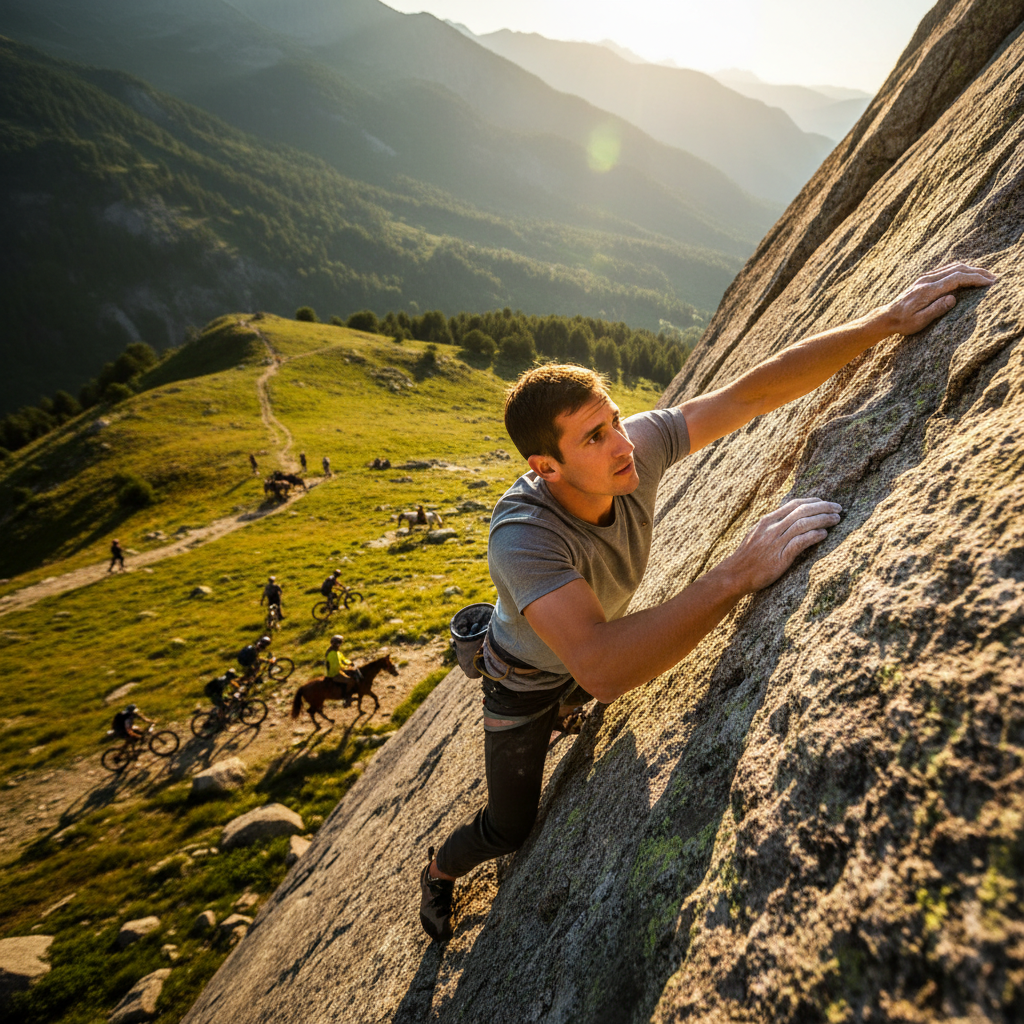
Sunburn Under Your Helmet? Why Climbers Still Get Cooked on Cooler Days
As an Australian climber, you know the drill. You're geared up, ready to tackle that route. The air might feel crisp, maybe a little breezy, definitely not 'scorching hot'. But a few hours later, you're peeling skin and wondering how on earth you got sunburnt. Surely your helmet was enough?
This is a common misconception, especially for climbers. We're often focused on the physical demands of the climb, the rock quality, the weather affecting our grip – not so much the invisible threat of the sun. But the Australian sun is relentless, and even on cooler days, it can deliver a nasty sunburn. Your helmet, while crucial for head protection, often leaves significant areas of your face and neck exposed to damaging UV radiation.
Let's get down to the nitty-gritty: why do climbers get sunburned even when it doesn't feel hot, and what can you actually do about it?
The Deceptive Cool Day: It's All About the UV Index
The number one reason climbers get sunburnt on cooler days is a misunderstanding of how UV radiation works. We associate heat with the sun's intensity, but UV rays are a separate, invisible force. On any given day in Australia, particularly during the warmer months, the UV index can be high even if the ambient temperature is moderate.
UV Radiation: This is the part of the sun's energy that causes sunburn, premature ageing, and skin cancer. It's not related to temperature. You can feel a cool breeze and still be exposed to dangerous levels of UV radiation.
Australian UV Index: If you check the Bureau of Meteorology (BOM) or other weather apps in Australia, you'll often see a UV Index reading. When this is 3 or above, sun protection is recommended. On many days, even without intense heat, the UV Index can easily reach 6, 7, or higher. This means significant DNA damage can occur in as little as 10-15 minutes of unprotected exposure.
Altitude and Reflection: Climbing often takes you to higher altitudes, where the atmosphere is thinner, offering less natural shielding from UV rays. Furthermore, surfaces like rock and even snow reflect UV radiation, increasing your exposure from multiple angles.
So, even if you're wearing a jumper and feel a bit chilly, don't let your guard down. The UV rays are still penetrating.
Your Helmet: Great for Impact, Limited for Sun
Your climbing helmet is a vital piece of safety equipment. It's designed to protect your head from falling rocks, impacts, and abrasion. However, most standard climbing helmets offer very little protection for your face and neck. Think about it:
The Brim: Many helmets have a small, often curved brim. This primarily offers a sliver of shade for your forehead and eyes, but it does little to shield your cheeks, nose, ears, or the back of your neck. These are prime spots for sunburn.
Gaps and Openings: Helmets have vents for airflow, which is essential for comfort. Sadly, these same openings allow UV rays to penetrate.
Positioning: The helmet sits on your head. Where does the sun usually hit your head and face when you're looking up or side-on at a climbing wall?
This is where the limitations become clear. Your helmet is for impacts, not for creating a constant sun-blocking shield for your entire head and neck. For comprehensive sun protection, you need more.
The Surprising Ways You're Getting Sunburned While Climbing
Let's break down the common scenarios where UV exposure sneaks up on you, even with a helmet on:
1. The Upward Gaze
As you climb, you're constantly looking up. This means the undersides of your cheekbones, your nose's bridge, and even your chin are exposed to direct sunlight when it's hitting from above. Your helmet brim offers minimal protection at these angles.
2. Reflective Surfaces
Rock itself is a significant UV reflector. The rough, textured surface of the climbing wall you're on can bounce UV rays back up at you from below and the sides, even if the direct sun's angle isn't hitting you squarely.
3. Neck Burn
Climbing often involves craning your neck, leaning back, and generally contorting your body. This exposes the back and sides of your neck – an area often left completely unprotected by a standard helmet. This is a particularly sensitive area and prone to painful sunburn.
4. Ears and Side of Face
Your ears and the sides of your face can be incredibly vulnerable, especially when you're side-on to the sun or when the sun is lower in the sky (like early morning or late afternoon climbs). The shape of most helmets simply doesn't cover these areas effectively.
5. Unprotected Ears and Nape of Neck
Do you ever notice your ears are red after a climb? Or that your hairline at the back of your neck is tender? This is because standard helmets often leave these areas completely exposed.
6. 'Just a Few Hours'
We often underestimate how quickly UV damage occurs. A few hours on the wall, even with intermittent cloud cover, can be enough to cause significant sunburn if you're not protected. Australia's high UV levels mean even short exposures are risky.
The Added Risk: Climbing During Peak UV Hours
Many climbers opt for early morning or late afternoon sessions to avoid the midday heat. While this is smart for comfort and performance, it doesn't negate the UV risk. In fact, during Australian summers, the UV index can remain high for extended periods, often peaking between 10 am and 3 pm but still posing a significant threat outside these times.
What's the Solution? Don't Rely Solely on Your Helmet.
It's clear that your helmet's primary function is impact protection. For comprehensive sun protection that complements your helmet, you need to think beyond it. The good news is, there are practical, effective solutions. Skipping on sun protection is not a badge of honour; it's a fast track to skin damage and long-term health problems.
Essential Sun Protection for Climbers
Here's a rundown of what you should be doing:
Sunscreen: Apply a broad-spectrum, water-resistant sunscreen with an SPF of 30 or higher. Reapply every two hours, or more often if sweating heavily. Don't forget your ears, neck, and any exposed skin.
Lip Balm with SPF: Your lips can also burn!
UV Protective Clothing: Long-sleeved shirts and pants made from UPF (Ultraviolet Protection Factor) rated fabric offer excellent protection. Think lightweight, breathable materials.
Wide-Brimmed Hat (Off the Climb): For approaches, descents, and rest breaks, a wide-brimmed hat is crucial.
Sunglasses: Protect your eyes from UV damage.
Helmet Brim Extension: This is where your helmet can become more effective. Devices like Da Brim are specifically designed to attach to your existing helmet, significantly extending the brim's coverage. This tackles the exposed areas – your cheeks, nose, ears, and neck – that standard helmets miss.
Implementing a Sun Protection Routine: Step-by-Step
Making sun protection a habit is key. It shouldn't be an afterthought.
Before You Leave Home:
1. Check the UV Index: Know what you're up against.
2. Apply Sunscreen: Cover all exposed skin generously, including your face, neck, ears, and any exposed wrists or ankles. Give it time to soak in.
3. Dress Appropriately: Opt for UPF clothing if you have it.
At the Crag (Before Climbing):
1. Secure Your Helmet: Ensure it fits correctly. If you have a helmet brim extension like Da Brim, ensure it's securely attached. This is your first line of defence for your face.
2. Top Up Sunscreen: Pay special attention to areas that will be exposed when you look up or are at odd angles.
3. Apply Lip Balm with SPF.
During Your Climb:
Be Mindful: Notice where the sun is hitting you. You might need to adjust your position or reapply sunscreen if you feel any initial prickling, though ideally, you've proactively applied enough and have added a protective brim.
After Your Climb:
1. Cleanse and Rehydrate: Wash off sweat and sunscreen. Apply a soothing moisturiser.
2. Check for Redness: Inspect your skin for any signs of sunburn.
Case Study: Sarah's Sunburn Wake-Up Call
Sarah, an avid climber from Sydney, always wore her helmet. She considered herself 'sun smart' because she applied sunscreen to her face before heading out each time. She typically climbed in the cooler mornings of spring, thinking she was safe. One day, after a long morning on a shaded route, she noticed her nose, the tops of her ears, and the back of her neck were bright red and painfully sunburned. Her helmet had protected her head but offered no real defence against the reflected UV from the rock and the specific angles she was climbing.
Sarah realised her sunscreen application wasn't enough, and her helmet's coverage was inadequate. She invested in a Da Brim for her helmet, changed to a lightweight UPF shirt, and became far more diligent about reapplying sunscreen and covering those often-missed spots. Her sunburn days have significantly reduced since.
Common Objections (and Why They Don't Hold Up)
"It's not that sunny today." As we've covered, UV radiation is independent of temperature. High UV Index days are common in Australia, even on cool days.
"My helmet is enough." A helmet is for impact protection. For facial and neck sun protection, it's very limited. You need to add to its capabilities.
"I don't burn easily." Sun damage is cumulative. Even if you don't get a blistering burn, you're still doing damage to your skin cells that increases your long-term risk of skin cancer and premature ageing. Australia has one of the highest rates of skin cancer globally.
"I'll be in the shade mostly." Even in partial shade, UV rays can reflect off surfaces and penetrate through lighter cloud cover. Plus, climbers are often exposed during approaches, descents, and moments when they are not directly on the shaded section of the route.
Taking Control: Invest in Your Skin's Future
Your passion for climbing shouldn't come at the cost of your skin's health. The Australian sun demands respect, regardless of the temperature. By understanding the risks and implementing proactive sun-safety measures, you can continue to enjoy your climbs without the painful aftermath of sunburn.
Don't wait until you're peeling. Equip yourself. Consider enhancing your helmet's sun protection with an attachment like Da Brim. Explore our Products page for solutions designed for outdoor enthusiasts. For more information on installation or general tips, check out our How to Install guide or our comprehensive FAQ. Stay safe, and happy climbing!
For more tips and tricks on climbing safety and gear, visit our Blog.