
Sunburn on Cooler Climbing Days? Why Helmets Aren't Enough
Even when the temperature drops, UV rays can still wreak havoc. Learn why climbers get sunburned on cooler days and how to stay protected.
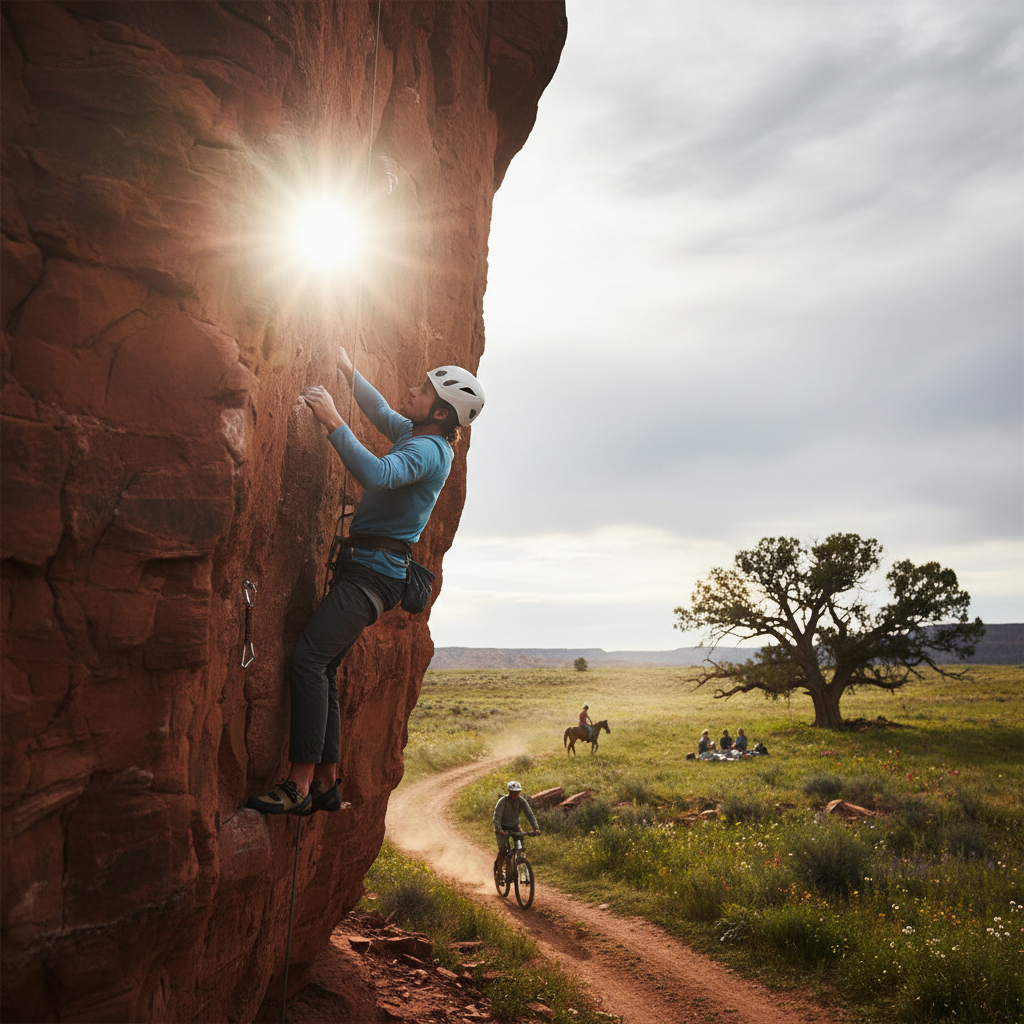
Sunburn on Cooler Climbing Days? Why Helmets Aren't Enough
As climbers, we often associate sunburn with sweltering heat. You'd think on a cooler, overcast day, you're in the clear. Think again. It’s a common misconception, and one that can lead to painful skin damage. Australian UV levels are notoriously high, and even on days that feel cool, the sun's radiation can be intense enough to cause sunburn, especially when you're exposed for hours on end.
Your helmet, while essential for protecting your head from rockfall and impact, offers surprisingly little protection against the sun’s relentless rays. The gaps between the helmet and your skin, combined with the limited coverage, mean significant sun exposure.
The Invisible Threat: UV Radiation
Sunburn isn't caused by heat; it's caused by ultraviolet (UV) radiation. There are three types of UV rays: UVA, UVB, and UVC. UVC is absorbed by the ozone layer, but UVA and UVB rays reach the Earth's surface and can penetrate your skin, causing damage.
UVB rays: These are the primary cause of sunburn. They are strongest between 10 am and 3 pm but can still be potent at other times.
UVA rays: These penetrate deeper into the skin and contribute to premature aging and skin cancer. They are present throughout the day and can penetrate clouds and glass.
Even on a cloudy day, up to 80% of UV radiation can penetrate the clouds. The reflective surfaces common in climbing environments – rock, sand, and even water – can further amplify UV exposure by bouncing rays back onto your skin.
Why Helmets Aren't Your Sunscreen
Helmets are designed for impact protection, not UV blocking. The vents that keep you cool also let in UV rays. The sections of your head and neck that are exposed around the helmet’s edge are prime targets for sunburn.
Think about it: how much of your face and neck is actually covered by your helmet? It’s minimal. This leaves significant areas vulnerable to cumulative sun damage, not just on hot days, but on any day the UV index is elevated.
The Australian Sun: A Different Beast
Australia has one of the highest UV levels in the world. Our position relative to the sun, combined with a generally thinner ozone layer in some regions, means we need to be extra vigilant. The UV Index, a measure of the strength of UV radiation from the sun, frequently reaches 'high' (6-7), 'very high' (8-10), and 'extreme' (11+) levels across much of the country, even outside of summer.
Climbers often spend extended periods outdoors, sometimes all day, at higher altitudes where UV radiation is even more intense. This prolonged exposure, even on a pleasant, mild day, significantly increases your risk of sunburn and long-term skin damage.
Common Climbing Sunburn Hotspots
Where do climbers typically get burned, even with a helmet?
Nape of the neck: This is a classic. Exposed skin below the helmet rim is directly in the sun's path during most climbing positions.
Ears: The tops and backs of your ears are easily missed.
Forehead and temples: Even with a brim, the sides of your face near your hairline can catch rays.
Lower face and chin: Depending on your helmet’s fit and how you move.
Hands and forearms: While gloves can help, your hands are constantly exposed when gripping rock.
Lips: Often forgotten and easily burned.
Sunburn on Cooler Days: The Deception
It’s easy to be lulled into a false sense of security when the air temperature is comfortable. Your body isn't sweating profusely, so you might not feel the need for as much protection as you would on a scorching summer afternoon. However, the UV level is largely independent of air temperature.
A cool, breezy day can be deceptive. You might feel comfortable, even a little chilly, but the UV radiation is still intense. This is why climbers often end up with red, peeling skin after a seemingly mild day out.
The Cumulative Effect
Sunburn is cumulative. Each time you get burned, you increase your lifetime risk of skin cancer, including melanoma. Protecting yourself isn't just about avoiding the immediate discomfort of a sunburn; it's about long-term skin health. Many climbers are unaware of the damage being done on seemingly benign days.
Practical Sun Protection for Climbers
Ignoring sun protection on cooler climbing days is a rookie mistake that seasoned climbers learn to avoid the hard way. Here’s how to stay protected, no matter the temperature.
The Essential Sun Protection Toolkit
Your helmet is just one piece of the puzzle. You need a multi-pronged approach.
Sunscreen: High SPF (30-50+), broad-spectrum sunscreen is non-negotiable. Look for water-resistant formulas. Reapply frequently.
Protective Clothing: Lightweight, long-sleeved shirts and trousers made from UPF-rated fabric are ideal. Even on cooler days, these can offer a comfortable layer of protection and breathability.
Wide-Brimmed Hat or Cap: An alternative or supplement to helmet protection, especially for approaches and descents, or for non-climbing outdoor activities. Products that offer extended coverage are best.
Sunglasses: Protect your eyes and the delicate skin around them.
Lip Balm with SPF: Your lips can burn too!
A Helmet Brim: This is where you can get proactive about your helmet.
Don't Have a Helmet Brim? You Need One.
If you’re wearing a helmet only, you're missing a crucial layer of sun defence. The right helmet brim can significantly increase the shade coverage for your face, neck, and ears.
We offer a range of helmet brims designed to easily attach to most climbing helmets. They extend the protective shadow cast by your helmet, blocking more harmful UV rays and reducing the area exposed to direct sunlight. Check out our Products page to find the perfect fit.
Table of UV Exposure Factors
Understanding what amplifies UV exposure can help you make better decisions.
| Factor | Impact on UV Exposure |
|---|---|
| Altitude | UV levels increase by ~10% for every 1000m. |
| Cloud Cover | Up to 80% of UV can penetrate light cloud. |
| Reflection | Snow, sand, and water can reflect UV rays by up to 80%. |
| Time of Day | UV is strongest between 10 am and 3 pm. |
| Season | UV is generally higher in spring and summer. |
| Latitude | Closer to the equator means higher UV. |
Integrating Sun Protection into Your Climbing Routine
Make sun safety as automatic as checking your knots.
Step-by-Step Sun Protection Plan:
1. Before you leave the house: Apply a generous amount of broad-spectrum SPF 30-50+ sunscreen to all exposed skin. Don’t forget your ears, neck, and the back of your hands.
2. On the approach: Wear a hat and sunglasses. If your helmet system includes a brim, ensure it's fitted. If not, consider an aftermarket brim like those found in our Products section.
3. While climbing: Reapply sunscreen every two hours, and more often if you're sweating heavily or have been swimming. Wear long sleeves and trousers if possible. Ensure your helmet brim is positioned to offer maximum facial shade.
4. During rests/belays: Maximize your shade. If possible, sit out of direct sun. This is a good time for quick sunscreen reapplication.
5. After climbing: Check for any areas you might have missed. Continue sun protection if you're still outdoors.
Common Objections and Rebuttals
"It's too cold to worry about sunburn."
Rebuttal: UV radiation is not directly linked to temperature. The Australian sun is powerful year-round. Our FAQ has more on this.
"My helmet protects me."
Rebuttal: Helmets protect from impact, not UV. The gaps around the helmet leave significant areas exposed. A helmet brim is crucial for added sun defence.
"I don't have time to apply sunscreen that often."
Rebuttal: A few minutes to reapply sunscreen is far better than days of painful skin or the long-term risks of skin cancer. Consider clothing and helmet brims for passive protection.
"I only get red, I don't really burn."
Rebuttal: Any visible redness is skin damage. Even without peeling, repeated exposure contributes to aging and cancer risk. Our Blog has detailed articles on skin health.
Don't Let a Cool Day Fool You
The Australian climbing environment presents a unique challenge with its high UV index. Relying solely on your helmet for sun protection, especially on cooler days, is a recipe for discomfort and long-term damage. Prioritise comprehensive sun safety.
Consider investing in a helmet brim that enhances your existing gear for better shade. Explore our Products to find solutions that integrate seamlessly with your helmet. Remember, prevention is always better than cure.
For more information on proper helmet brim installation, visit our How to Install guide. Stay safe, climb smart, and protect your skin.