
Sun Smart Headwear: Choosing the Right Helmet Sun Brim for Australian Conditions
Don't let the harsh Australian sun stop you. Learn how to select the perfect helmet sun brim to stay cool, comfortable, and sun-safe, no matter your activity.
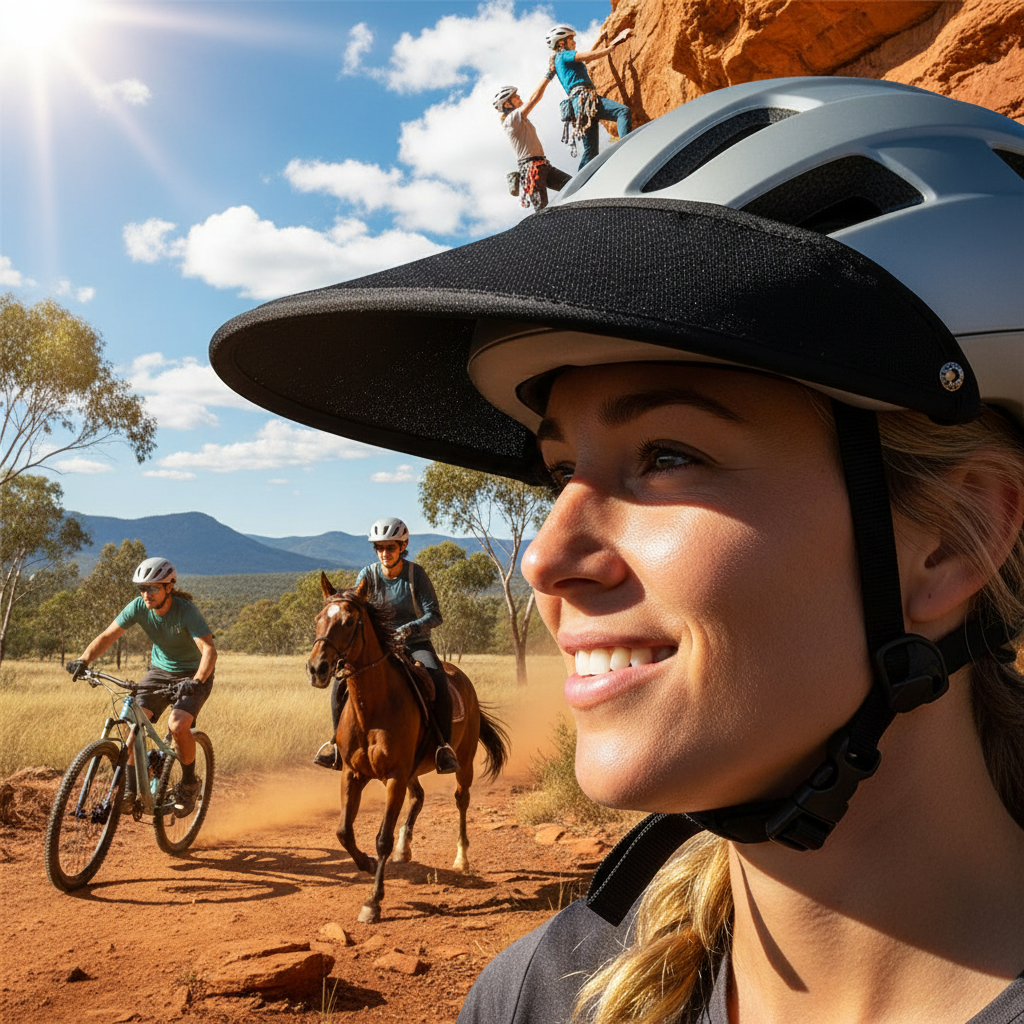
Sun Smart Headwear: Choosing the Right Helmet Sun Brim for Australian Conditions
The Australian sun is unforgiving. We all know it. Long days spent outdoors, whether for work, sport, or recreation, mean prolonged exposure to harmful UV rays and intense heat. While helmets are essential for safety, they often leave your face and neck exposed. That's where a quality helmet sun brim comes in. But with so many options, how do you pick the right one for your needs?
This guide cuts through the noise. We'll tell you exactly what to consider to ensure your chosen brim offers optimal sun protection, comfort, and practicality for the unique Australian environment.
Why You Need a Helmet Sun Brim (Beyond Just Comfort)
Let's be blunt. Relying on sunscreen alone for your face and neck when wearing a helmet is a losing battle. Sweat washes it off, and the gaps between your helmet and your face allow direct UV penetration. A helmet sun brim acts as a physical barrier, like a bill on a cap, but integrated with your head protection.
Here's why it's non-negotiable Down Under:
Serious UV Protection: Australian UV levels can be extreme. A good brim shades your face, ears, and often neck, significantly reducing UV exposure. This is critical for preventing sunburn, premature aging, and, most importantly, skin cancer.
Heat Management: Direct sun on your face and scalp feels like a furnace in summer. A brim creates shade, lowering the perceived temperature and making your experience much more bearable, especially during long activities.
Reduced Glare: On bright days, sun glare can be a serious hazard, impacting vision during sports or critical tasks at work. A brim helps cut down on this glare, improving your focus and safety.
Eye Protection: While not a replacement for sunglasses, a brim can offer some protection from dust and debris kicked up during activities, working in conjunction with your eyewear.
Understanding Your Activity: The Foundation of Choice
This is the most crucial step. Your helmet brim needs to complement, not hinder, your activity. What will you be doing while wearing it? Where will you be doing it? How long will you be out?
Key Activity Considerations:
Type of Helmet: What kind of helmet are you using? Industrial hard hats, cycling helmets, construction helmets, motorcycling helmets, or even equestrian helmets all have different shapes and mounting points. Your brim must be compatible. (See Products for compatible helmets and brims).
Duration of Exposure: Will you be out for a quick 30-minute ride, a full workday, or a multi-day trek?
Environment: Are you in direct, open sunlight (e.g., construction site, open field, beach), or is there occasional shade (e.g., bushwalking)?
Movement & Ergonomics: How much head movement is involved? Will the brim snag on anything? Does it obstruct your vision in critical moments?
Heat & Ventilation: Some activities generate more body heat. Does the brim hinder airflow where you need it most?
Types of Helmet Sun Brims: What's Out There?
While designs vary, most helmet sun brims fall into a few categories based on their coverage and attachment method. Remember, not all brims are created equal, and some are designed for specific helmet types. Compatibility is key.
Broadly, brims offer:
Short Brims: Offer basic facial shade, good for reducing glare and light sun exposure. Less likely to snag.
Medium Brims: A good all-rounder, providing significant facial and ear shade without being overly cumbersome.
Long Brims: Maximise shade, covering the face, ears, and often extending down to the neck. Ideal for prolonged, direct sun exposure.
Some brims are universal, designed to clip onto a wide range of helmets. Others are specifically designed for particular helmet models. Always check compatibility before purchasing. This is where Products can help you find the right fit.
Feature Focus: What to Look For
Beyond just the length, consider these practical features:
Material and Durability
UV-Resistant Materials: The brim itself should be made from materials that don't degrade quickly under intense UV. Look for plastics with UV stabilisers.
Flexibility vs. Rigidity: A slightly flexible brim can withstand minor knocks better without snapping. A rigid brim might offer a more consistent shade line but can be more prone to breakage.
Washability: If you're working or sweating heavily, the ability to easily clean your brim is a big plus.
Attachment Mechanism
Secure Fit: This is paramount. The brim must attach firmly to your helmet. If it's loose, it can shift, become a nuisance, or even fall off.
Ease of Installation/Removal: Can you attach and remove it easily? This is important for cleaning, storage, or if you need to switch between helmet setups. (See How to Install for guidance).
Compatibility: As mentioned, does it work with your helmet? Most brims attach via clips, Velcro, or a dedicated slot.
Coverage and Shape
Full Facial Coverage: Does it shade your forehead, cheeks, and bridge of your nose? What about your ears?
Neck Protection: Some longer brims extend down to offer partial neck coverage. This is invaluable in Australia.
Peripheral Vision: A well-designed brim shouldn't significantly obstruct your side vision, which is critical for situational awareness on roads, worksites, or trails.
Matching the Brim to Your Activity: Practical Scenarios
Here’s a practical breakdown based on common Australian activities:
| Activity Type | Recommended Brim Length | Key Considerations | Example Use Cases |
|---|---|---|---|
| Construction/Trade | Long to Medium | Durability, snag resistance, secure fit, maximum shade for long days, compatibility with safety helmets. | Roofing, site inspection, general labour, highway work. |
| Cycling (Road/MTB) | Short to Medium | Lightweight, good airflow, minimal snagging, doesn't impede posture or vision, secure attachment to cycling helmet. | Commuting, trail riding, road racing, recreational cycling. |
| Gardening/Landscaping | Medium to Long | Extended coverage for neck and ears, protection from sun and airborne debris, comfortable for repetitive movements. | Mowing, pruning, planting, general garden maintenance. |
| Hiking/Bushwalking | Medium | Lightweight, good balance of shade vs. airflow, won't catch on branches, secure fit over hiking helmet. | Trekking, trail hiking, overnight camping. |
| Horse Riding | Medium | Balance of peripheral vision, protection from sun and dust, doesn't interfere with reins or rider position. | Trail riding, arena work, casual riding. |
| Mining/Resource Sector | Long | Maximum UV protection for exposed sites, robust construction, compatibility with industrial hard hats. | Open-cut mining, exploration, remote site work. |
| General Outdoors | Medium to Long | Versatile coverage, comfort during casual use, easy to attach/remove. | Camping, fishing, caravanning, general yard work. |
Objection Handling: "But won't a long brim snag on everything?"
This is a valid concern, especially for activities involving trees or tight spaces. The key is design and your usage. Look for brims with smooth, rounded edges. For high-snag environments, a medium brim or a specially designed flexible brim might be a better compromise. Always assess your specific environment. Can you see yourself walking through dense bush with a long brim? Probably not. But for an open construction site, it's a no-brainer.
Step-by-Step: Choosing Your Perfect Brim
Follow these steps to avoid making a mistake. We’ve streamlined the process.
Step 1: Identify Your Primary Helmet Type.
What helmet do you use most often? Is it a standard hard hat, a cycling helmet, or something else? This dictates what style of brim you can even consider.
Step 2: Define Your Most Frequent Activity.
Be honest. Are you mostly on a worksite, on the bike, or in the garden? Focus on the activity where you need the most sun protection.
Step 3: Assess Your Sun/Heat Exposure Levels.
How long are you typically exposed to direct sun during that primary activity? If it's more than an hour, you need more coverage. If you're constantly in and out of shade, a shorter brim might suffice.
Step 4: Consider Your Environment.
Are there many overhead obstructions (trees, scaffolding) where a longer brim might snag? Or are you in open spaces?
Step 5: Check Compatibility.
Once you have a general idea of length and features, visit Products and look for brims that are explicitly listed as compatible with your helmet type. Read product descriptions carefully.
Step 6: Read Reviews (If Available) and Consult FAQs.
See what other users say. Does the brim stay put? Does it offer good shade? Our FAQ section might also answer specific questions.
Step 7: Prioritise Secure Fit and Durability.
Even the best shade is useless if the brim is flimsy or falls off. A secure fit is paramount for effectiveness and safety.
Objection Handling: "Won't it just make my helmet too hot?"
It's counterintuitive, but a brim can actually reduce overall heat sensation. By shielding your face and forehead from direct solar radiation, you prevent that intense feeling of heat buildup. While the brim itself might get warm, it's blocking the sun's energy from hitting your skin directly. Proper ventilation in your helmet design is still key, but the brim is actively preventing a heat source from impacting you.
Maintenance and Care
To get the most out of your helmet sun brim:
Clean Regularly: Wash with mild soap and water, especially if used in dusty or sweaty conditions.
Inspect for Damage: Check for cracks or signs of UV degradation.
Store Appropriately: Avoid storing in direct sunlight for extended periods when not in use, as this can accelerate material wear.
The Bottom Line
In Australia, sun protection isn't optional; it's a necessity. A helmet sun brim is a simple, effective addition to your headwear that provides significant benefits for comfort and long-term health. By carefully considering your activity, helmet type, and the Australian sun's intensity, you can choose a brim that keeps you safe, cool, and focused.
Don't wait until you're sunburnt. Invest in the right sun protection for your head. Explore our range at Products and make sure you're sun-smart on your next outing.
For more tips and information, check out our Blog and FAQ pages.