
Rock's Sneaky Sunburn: Why Your Helmet Needs a Brim in Australia
Think your helmet's enough? Think again. Climbing in Australia means dealing with UV reflected off rock – a double whammy for your skin and eyes. Learn why adding a brim to your helmet is essential sun protection.
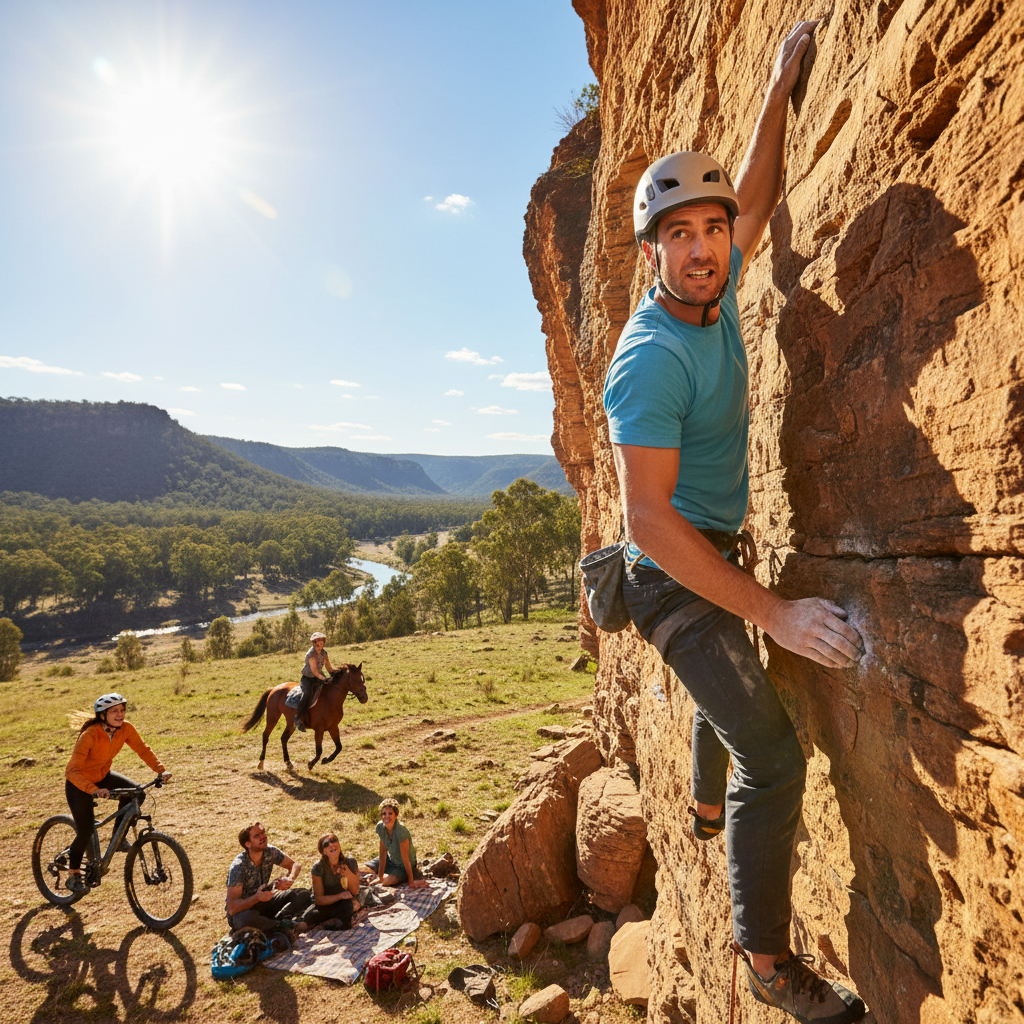
Rock's Sneaky Sunburn: Why Your Helmet Needs a Brim in Australia
You're geared up, ready to send it up that crag. You've got your helmet, your harness, your chalk. But have you considered how the very rock you're climbing is actively fighting your sun protection?
In Australia, we know the sun is no joke. Our UV index regularly soars, our days can be long and brutal, and sunburn is a genuine risk even on seemingly mild days. We often think of protection as direct sunlight. But in climbing, there's a hidden danger: UV reflection.
The Double Dose of Aussie UV
Direct sunlight is the obvious culprit. But rock surfaces, especially lighter-coloured granite, sandstone, and quartz-rich formations, are highly reflective. This means that UV radiation doesn't just hit you from above; it bounces off the rock, hitting you from multiple angles. Your helmet, designed to protect your head from impacts, offers limited defence against this reflected UV assault.
Imagine this: the sun is beating down. The UV rays hit the rock face. The rock, like a mirror, bounces a significant portion of that UV back up towards you. If you're looking up, navigating a traverse, or simply resting on a ledge, your face, neck, and eyes are getting a double dose of damaging UV radiation. This significantly increases your risk of sunburn, premature ageing, and long-term skin damage, including skin cancer.
Why Helmet Brims Matter for Climbers
Your standard climbing helmet might have a small lip at the front, but it's designed for impact protection, not comprehensive sun shade. This is where accessories like the Da Brim come in. By attaching a wide brim to your helmet, you create a significant barrier against both direct and reflected UV rays.
Key Benefits of a Helmet Brim for Climbing:
Reduces UV Exposure: The brim casts a shadow over your face, neck, and ears, blocking a substantial amount of direct and reflected UV. This is crucial in Australia where UV levels are consistently high.
Protects Your Eyes: Reflected UV from rock is particularly harsh on your eyes. A brim helps shield them from glare and damaging rays, reducing the risk of photokeratitis (snow blindness, but from rock!) and long-term eye damage.
Minimises Heat Buildup: While the primary focus is UV, the shade provided by a brim can also help keep your head cooler, making those long ascents in the Australian heat more tolerable.
Prevents Sunburn on Neck and Ears: These areas are often exposed even with a helmet, especially when looking upwards. A brim extends protection to these vulnerable spots.
Comfort and Focus: Less squinting, less sun on your face, and a cooler head mean you can focus better on the climb, not on battling the sun.
Facing the Objections Head-On
We get it. Adding something to your helmet might feel… extra. You might have concerns.
Objection 1: "Will it fall off?"
This is a valid concern. Safety equipment is paramount. The Da Brim is designed to attach securely to most standard climbing helmets using robust clips. Our How to Install guide shows you exactly how it's done. Designed for active use, it's built to stay put. Remember, a piece of gear that falls off is worse than useless; it's a hazard. We've engineered the Da Brim for reliability.
Objection 2: "Will it snag on things?"
The wider brims, while offering maximum shade, do present a slightly larger profile. However, the Da Brim is designed with a flexible material that can withstand minor brushes. Most climbers find they adapt quickly. The benefits of the shade generally outweigh the slight increase in profile, especially when compared to the damage from prolonged, unprotected sun exposure. It’s about managing risks – the risk of snagging versus the certainty of UV damage.
Objection 3: "Isn't my helmet enough?"
As we've discussed, your helmet protects your head from physical impact. It's not designed as a UV shield. Think of it like wearing a raincoat; it protects you from the rain. But if you're wading through a river, you need more than just a raincoat, right? Your helmet is your primary impact defence; the Da Brim acts as your essential UV defence system, specifically addressing the reflection problem unique to climbing environments.
Objection 4: "It'll look silly."
Honestly? There's a good chance you'll see more and more climbers adopting brims as awareness grows. What looks 'silly' today could be standard practice tomorrow, especially as Australian sun awareness continues to increase. More importantly, what looks silly is premature ageing and skin cancer. A little bit of practical style is a small price to pay for long-term health.
UV Reflection in Practice: A Table
Here's a quick look at how different rock types can reflect UV, making that brim a smart addition:
| Rock Type | Typical UV Reflectivity | Considerations for Climbers |
|---|---|---|
| Granite | High | Common in many climbing areas; significant reflected UV. |
| Sandstone | High to Medium | Colour dependent; lighter sands reflect more. |
| Basalt (Dark) | Low to Medium | Absorbs more direct UV, but still reflects. Less problematic than light rock |
| Limestone | Medium | Varies with colour and texture; can be quite reflective. |
This isn't a definitive scientific chart, but a practical guide. The common denominators in popular climbing areas – granite and sandstone – are particularly good at bouncing UV back at you. So, even if you're mostly on darker rock, there will be lighter sections, and the sun is always a factor.
Your Sun Protection Checklist for Australian Climbs
Before you head out, run through this checklist to ensure you're covered:
[ ] Helmet with a secure Da Brim attached: Crucial for direct and reflected UV protection.
[ ] High SPF Sunscreen: Apply liberally to all exposed skin – face, neck, arms, hands. Reapply regularly.
[ ] Sunglasses: Essential for protecting your eyes from glare and UV, especially during descents or while belaying.
[ ] Protective Clothing: Long sleeves, UPF-rated clothing if possible. Consider a long-sleeve rash guard under your harness for longer sessions.
[ ] Wide-brimmed Hat: While it won't fit under your helmet, keep it for approaches and descents. A balaclava or neck gaiter can also offer extra coverage.
[ ] Hydration: Sun exposure leads to dehydration. Drink plenty of water.
[ ] Awareness: Understand the UV index for the day and your location.
This comprehensive approach ensures you're not just protected from the primary threat, but also from the secondary, reflective one.
Integrating Da Brim into Your Climbing Routine
It's simple. Think of it as another piece of essential gear, like your helmet itself.
Step 1: Acquisition
Browse our range of Da Brim helmet brims at our Products page. Choose the size and style that best suits your helmet and climbing needs. We offer various sizes to ensure a snug fit.
Step 2: Installation
Follow the straightforward instructions on our How to Install page. It's a quick process that dramatically boosts your sun protection. Most installations take less than five minutes.
Step 3: Pre-Climb Check
Before every climb, double-check that your Da Brim is securely attached to your helmet. A quick visual and tug should suffice. This is part of your routine, like checking your harness buckle.
Step 4: Climb On!
Enjoy your climb with the added peace of mind that you're significantly better protected from the harsh Australian sun and its reflective properties.
Step 5: Post-Climb Care
Clean your Da Brim as needed, following care instructions. Ensure it's dry before storing to prolong its life.
The Long Game: Protecting Your Skin and Your Passion
Climbing in Australia is an incredible experience. We have world-class rock and scenery. But we also have one of the most intense UV environments on Earth. Your passion for climbing shouldn't come at the cost of your long-term health.
Ignoring reflected UV is a common oversight. It’s like only wearing sunscreen on your face and forgetting your neck and ears. It’s a gap in your protection. Adding a Da Brim to your helmet is a practical, effective, and increasingly necessary step for any serious climber in Australia.
Don't let the rocks you love to climb be the cause of sun damage you'll regret later. Invest in comprehensive protection. Visit our Products page, explore our Blog for more tips, and check our FAQ if you have further questions.
Stay safe, stay protected, and keep climbing.