
Rockface Reflection: How UV Damage Gets Worse for Helmeted Climbers in Australia
Don't let your helmet be a false sense of security. Australian rockfaces amplify UV radiation, increasing your risk of sun damage. Learn how to protect yourself.
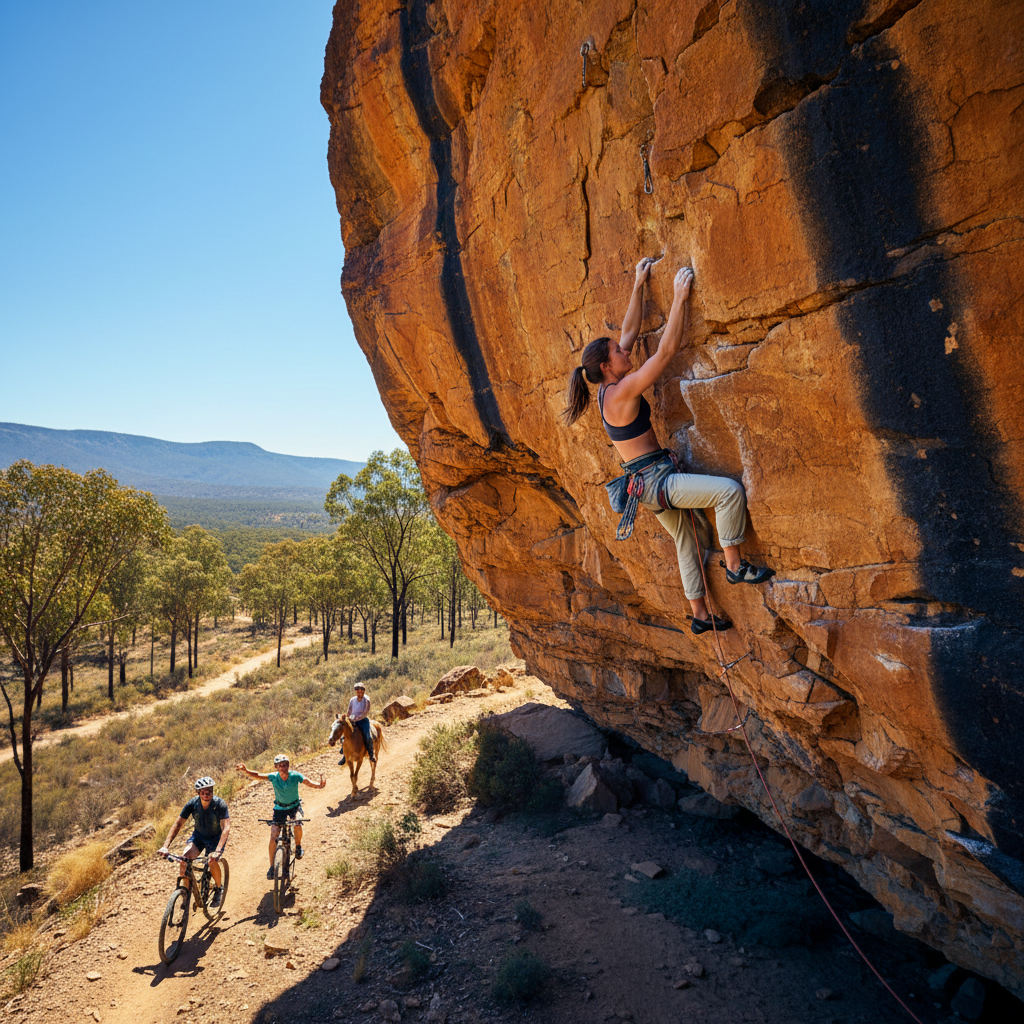
Rockface Reflection: How UV Damage Gets Worse for Helmeted Climbers in Australia
Australia. We love our outdoors. We chase the sun – up the mountains, down the coast, and across the rugged Australian landscape. Climbers, in particular, spend hours under that big, bright sun, often with a helmet strapped firmly to their head. And while that helmet is crucial for impact protection, it does next to nothing to shield you from the sun's insidious ultraviolet (UV) rays, especially when they're bouncing off the very rock you're scaling.
Let's be blunt: you're not just exposed to direct sunlight when you're climbing. The surfaces around you – the rockface, the ground, even your gear – can reflect UV radiation, effectively doubling your exposure. And in Australia, that's a problem. Our UV index is notoriously high, especially during the warmer months. Long days spent on the crag mean prolonged exposure. Add the reflective element, and you're looking at significant sun damage potential, even when you think you're covered.
The Science of Reflection
UV radiation from the sun hits a surface. Some of it is absorbed, and some of it is reflected. Light-coloured and smooth surfaces are generally better reflectors. Rock, especially granite and sandstone, can be surprisingly reflective. Think about it: how often do you squint on a bright day even when you're in the shade, just because the sun's hitting the ground nearby? That's reflected UV radiation.
When you’re belaying, or resting on a ledge, or even just in mid-climb, the rock below you, to the side of you, and even the ground far below can bounce UV rays straight back up at you. This means that even if you're partially shaded by an overhang, you're still copping a significant dose of UV. This secondary exposure can be just as damaging as direct sunlight, if not more so, because it’s often unexpected and unmitigated.
Why This Matters for Climbers:
Increased Cumulative Dose: Every bit of UV exposure adds up over your lifetime. More reflection means a higher cumulative dose, increasing your long-term risk of skin cancer.
Face and Neck Exposure: Your face, ears, and neck are prime targets for reflected UV. These are areas that are difficult to protect completely, even with a helmet.
Eye Damage: Reflected UV can also contribute to eye strain and long-term damage like cataracts. Sunglasses are essential, but can they always keep up with reflected rays?
False Sense of Security: Your helmet feels protective. It is protective. But it's designed for impact, not UV mitigation. Relying on it for sun protection is a mistake.
Australian Conditions: A Perfect Storm for Sun Damage
We’re not in Scandinavia. Australia’s UV levels are among the highest in the world. The UV index can reach extreme levels (8+) during peak sun hours, especially in summer. On top of that:
Long Daylight Hours: Especially in summer, climbing days can stretch from dawn till dusk, significantly increasing your exposure time.
Altitude: Many prime climbing areas are at higher elevations, where the atmosphere is thinner, and UV radiation is more intense.
Clear Skies: While cloud cover can offer some respite, many of our best climbing days are gloriously clear, meaning maximum direct and reflected UV.
The Helmet Blind Spot: What Your Helmet Doesn't Do
Your helmet is designed to protect your head from falling rocks, impacts, and abrasion. It’s a lifesaving piece of gear. However, its coverage is limited. It primarily protects the top and sides of your head. The front brim, if it has one, offers some face shade, but it’s often insufficient against UV reflecting up from below.
Here’s what your standard climbing helmet doesn't protect you from regarding UV:
Your Face: Cheeks, nose, forehead, and chin are highly exposed, especially to reflected UV from below.
Your Ears: Often directly exposed, and prone to sunburn and long-term damage.
Your Neck: The back and sides of your neck can receive significant UV, particularly when looking up or when the sun is at a lower angle.
The Back of Your Head: The nape of your neck can be exposed, especially when you lean your head back.
Overcoming Objections: “But I wear sunscreen!”
This is the most common objection. And sunscreen is essential. No argument there. But let’s be realistic about applying and maintaining it, especially when you're climbing:
Sweat: You're exerting yourself. You sweat. Sunscreen washes off. Reapplication mid-climb is often impossible or impractical.
Rubbing: Harnesses, chalk bags, ropes – these all rub against your skin. They can wipe away sunscreen from your neck and lower face.
Incomplete Coverage: It's hard to get perfect, even coverage every single time, especially on those hard-to-reach spots like the back of your neck.
Application Intervals: You need to reapply sunscreen every two hours, or more frequently if you're sweating or swimming. Are you really doing that on a multi-pitch route?
Sunscreen is a vital layer of defence, but it’s not a complete solution, especially when facing amplified UV from reflection. You need more.
The Solution: Extended Brims for Helmets
This is where a simple, practical solution comes in. Add a brim that extends the shade. Not just the minimal lip on your current helmet, but something substantial that casts a shadow over your face, ears, and neck. This is where products like Da Brim come into play.
These are not just fashion accessories. They are functional pieces of gear designed to extend the protective capabilities of your existing helmet. They work by physically blocking UV radiation from hitting your skin. The larger the brim, the more surface area is protected.
Table: UV Reflection Impact on Different Surfaces
| Surface Type | Typical UV Reflectivity | Impact on Climbers |
|---|---|---|
| Sand / Light Gravel | High (15-25%) | Significant UV bounce from belay stances and descents |
| Snow | Very High (60-80%) | Extreme UV amplification (less common in climbing) |
| Water | Moderate (5-15%) | Less relevant for most rock climbing, but can apply |
| Light-Coloured Rock | Moderate (10-20%) | Direct and amplified UV exposure on cliff faces |
| Dark Rock / Earth | Low (up to 5%) | Less reflective, but still direct sun exposure |
Practical Steps for Enhanced Sun Protection
Protecting yourself from rockface UV reflection isn't about one single thing. It's a layered approach.
Your Sun-Safe Climbing Checklist:
[ ] Helmet with Extended Brim: The most critical addition for comprehensive UV defence. Ensure it fits securely.
[ ] High SPF Sunscreen: Apply generously to all exposed skin at least 15-20 minutes before heading out. Use SPF 30 or higher, broad-spectrum.
[ ] Regular Reapplication: Set reminders or plan reapplication breaks, especially on longer climbs or days.
[ ] Protective Clothing: Long sleeves and pants made from UPF-rated fabric offer excellent protection.
[ ] Wide-Brimmed Hat (under helmet?): This is tricky. A brimmed hat under a helmet can interfere with fit and safety. For dedicated sun protection where helmet use isn't mandated for impact, a hat is great. When a helmet is required, an extended helmet brim is the better, safer choice. Always prioritize proper helmet fit.
[ ] Sunglasses: Essential for protecting your eyes from direct and reflected UV.
[ ] Seek Shade When Possible: Utilise natural shade during breaks, but don't rely on it to negate reflected UV.
Step-by-Step: Integrating an Extended Brim into Your Routine
It’s simpler than you think to upgrade your sun defence.
1. Choose Your Extended Brim: Explore the Products page to find an extended brim designed for your helmet type. Factors to consider include brim length and compatibility.
2. Installation: Follow the straightforward instructions on How to Install. Most designs are clip-on or use hook-and-loop fasteners, requiring no permanent modification to your helmet.
3. Test Fit: Wear your helmet with the attached brim to ensure it doesn’t impede your vision or comfort. Check that it doesn’t compromise the helmet’s safety features or how it sits on your head.
4. Apply Sunscreen: Before you even head to the crag, apply your broad-spectrum, high SPF sunscreen. Don't forget your ears, neck, and the back of your hands.
5. Climb & Reapply: Enjoy your climb! During rest breaks, or at the end of a pitch, check your sun protection. Reapply sunscreen as needed and consider the effectiveness of your extended brim in protecting your face and neck from reflected UV.
Don't Get Caught Out
It's easy to underestimate the sun in Australia, especially when you're focused on the climb. The reflective nature of rock amplifies the UV threat, turning a sunny day into a potential burn and long-term damage risk. Your helmet is for impact. For UV, you need an extra layer of defence.
Investing in an extended brim directly addresses the reflective UV problem. It’s a practical, effective way to significantly increase the sun protection offered by your standard climbing helmet. Don't let reflection be your undoing. Get the right gear, follow best practices, and keep climbing safely and sun-smart.
Still have questions? Check out our FAQ or explore more tips on our Blog.