
Helmet Up, Sun Down: Your Guide to Staying Safe and Protected in the Australian Sun
Wearing a helmet in equestrian sports is non-negotiable. But what about protecting your skin from the harsh Australian sun? This guide tackles the sun safety challenge for helmet wearers head-on, offering practical solutions.
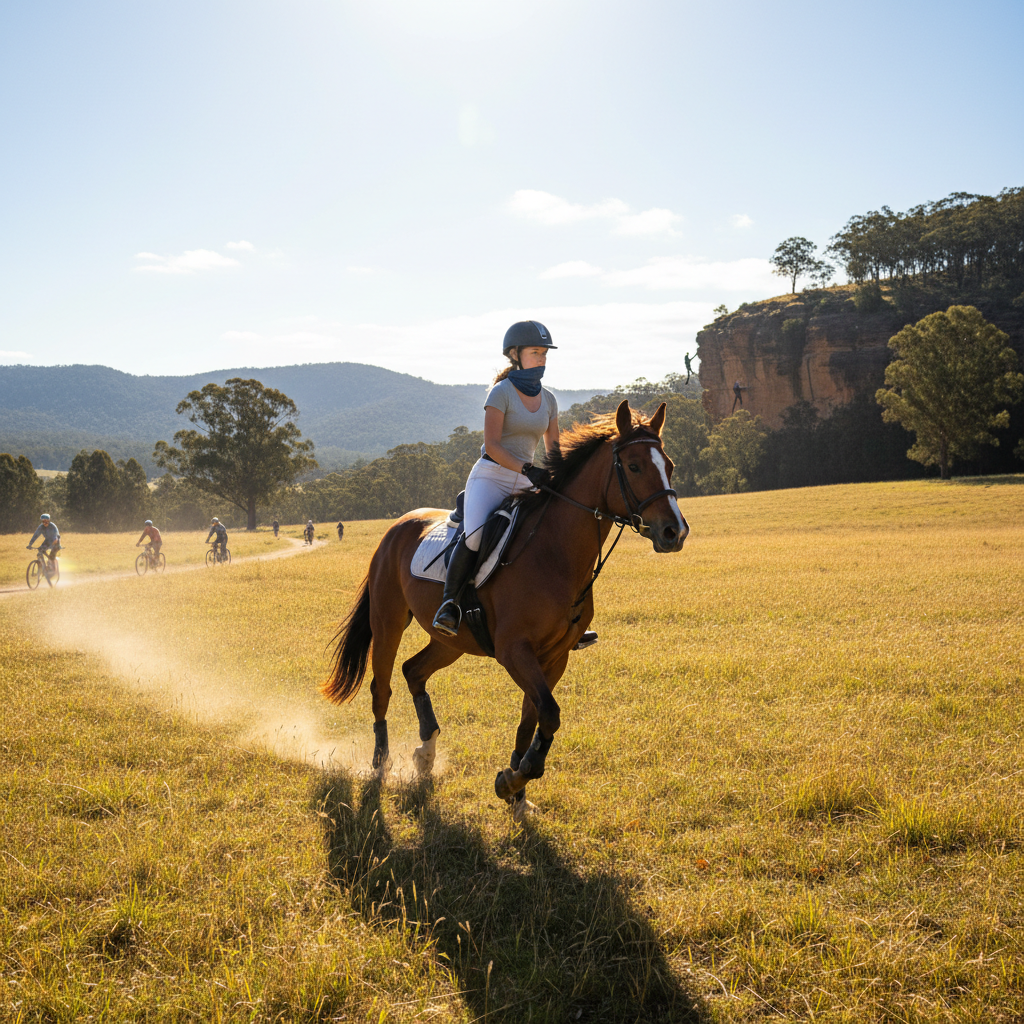
Helmet Up, Sun Down: Your Guide to Staying Safe and Protected in the Australian Sun
For Aussies, the love of equestrian sports often comes with a relentless sun. We know the drill. Helmet on? Absolutely. But what about the skin that’s still exposed? The face, the neck, the ears – they’re all prime targets for the potent UV rays we deal with year-round, especially during long days out on the trails or at the arena.
This isn't about choosing between your helmet and your skin. It’s about ensuring you have robust sun protection while wearing your helmet. Let's get practical.
The Non-Negotiable: Helmet Safety
This part is simple. In equestrian sports, a helmet is as essential as a saddle. Falls happen. We all know someone, or have been that someone, who’s had a tumble. A properly fitted, certified helmet is your best defence against serious head injuries. There’s no debate here. Always wear your helmet, and ensure it meets Australian safety standards.
The Overlooked Threat: The Australian Sun
Australia has some of the highest UV radiation levels in the world. Even on cloudy days, UV rays can penetrate, causing sunburn, premature ageing, and significantly increasing your risk of skin cancer. For equestrians, this is a constant battle.
Think about your typical riding day:
Long hours: Often, a casual ride can turn into several hours, especially if you're training or out on a trail ride.
Direct exposure: You're out in the open, often with minimal shade.
Reflection: Sand, water, or even dusty arenas can reflect UV rays, increasing your exposure.
Heat: High temperatures can make heatstroke a concern, but don't let the heat lull you into a false sense of security about UV levels. The UV index can be dangerously high even when it feels cool.
The Sun Protection Conundrum for Helmet Wearers
So, you're wearing your helmet. Great. But what about your face? Traditional sun hats aren't an option. Wide-brimmed hats under helmets? A safety hazard and incredibly uncomfortable. What’s left?
Many riders rely on:
Sunscreen: Essential, but often not enough on its own for prolonged exposure. It needs reapplication, which can be tricky when you're mid-ride or in the middle of a competition.
Clothing: Long sleeves and UV-protective clothing are fantastic for the body, but your face and neck still need specific attention.
Caps: Wearing a cap under a helmet is a no-go. It compromises helmet fit and effectiveness.
This is where many riders face a frustrating trade-off: the comfort of a helmet versus comprehensive sun protection.
Practical Solutions: Integrating Sun Protection with Your Helmet
We need solutions that work with your helmet, not against it. The goal is to extend the protective coverage of your helmet without compromising safety or comfort.
1. The Undervisor: Extending Your Helmet's Shield
Think of your helmet's peak as a good start, but it's often too small to do the job on its own, especially for your nose and cheeks. An undervisor, or a helmet brim extender, is designed to do just that – extend the shadow cast by your helmet.
What to look for in a helmet brim extender:
Secure attachment: It needs to stay put no matter how bumpy the ride.
UV protection: The material itself should ideally offer UV protection.
Coverage: It should provide shade for your face, eyes, nose, and ears.
Durability: It needs to withstand sweat, sun, and general wear and tear.
These add-ons can dramatically reduce the amount of direct UV light hitting your face. They work by being attached to your existing helmet, effectively creating a much larger shade zone.
Choosing a solution that allows for easy attachment and detachment is key. You don't want to be fumbling with it before a ride.
2. Neck Protection: The Often-Forgotten Zone
Sunburn on the back of the neck is common and painful. It's also a high-risk area for skin cancer. A simple neck gaiter or a long scarf made of breathable, UV-protective fabric is a game-changer. You can pull it up over your lower face on very hot or sunny days, or simply wear it around your neck. Look for lightweight, moisture-wicking materials that won't make you overheat.
3. Eye Protection: Beyond Sunglasses
While sunglasses are crucial, sometimes the sun’s glare comes from below or the sides. A helmet brim extender can help with direct overhead sun, but consider sunglasses with good UV protection that wrap around your eyes.
4. Seeking Shade (When You Can)
This sounds obvious, but it’s worth stating. Schedule your rides during cooler parts of the day when possible, especially during summer. Early mornings and late afternoons are your friends. If you have long breaks at competitions, find shade under a tree or in your float.
Common Objections and How to Handle Them
Objection 1: "An attached brim will make my helmet unsafe."
Reality Check: This is a valid concern. Not all modifications are safe. However, a designed helmet brim extender, like a Da Brim, is engineered to attach securely without compromising the helmet’s structural integrity or impact absorption capabilities. It’s designed to sit on the peak, not interfere with the main shell or the straps. Always ensure any add-on is from a reputable source and designed for your specific helmet type if possible. Improperly attached accessories are the risk, not well-designed ones.
Objection 2: "It's too hot to add more to my helmet."
Reality Check: This is where material choice and design matter. A good sun brim extender is usually lightweight. Furthermore, the shade it provides can actually make you feel cooler by reducing direct solar radiation on your face. Coupled with breathable neck gaiters and moisture-wicking base layers, you can manage heat effectively. Remember, sunburn and heatstroke are both serious risks; fighting both is crucial.
Objection 3: "It looks silly / I'll stand out."
Reality Check: Safety and health should always trump aesthetics. The Australian sun is serious business, and skin cancer statistics are stark. Protecting yourself is the priority. Many riders are adopting these solutions, and practicality is winning out over outdated notions of appearance. A rider who is healthy and protected for the long term is a rider who gets to keep enjoying their sport.
Simple Checklist for Sun-Safe Riding
Before you head out, run through this quick check:
[ ] Helmet fitted correctly and securely?
[ ] Helmet brim extender attached properly? (If using one)
[ ] Face, neck, and ears covered or protected (e.g., gaiter, long sleeves)?
[ ] Sunglasses with UV protection for eyes?
[ ] Water accessible?
[ ] Sunscreen applied to any exposed areas not covered by protection?
Integrating Protection: A Step-by-Step Approach
Let’s break down how to effectively integrate extra sun protection with your helmet:
Step 1: Assess Your Helmet. Determine the type of helmet you have (e.g., equestrian helmet with a standard peak). This will help you choose compatible accessories.
Step 2: Choose Your Sun Protection Add-on. For extending facial shade, a helmet brim extender is the most effective solution that works with* your helmet. Look for products specifically designed for helmets. Check out available options that offer good coverage. Products are designed with durability and effectiveness in mind for Australian conditions.
Step 3: Installation and Fit. Follow the instructions carefully for attaching your chosen brim extender. For products like the Da Brim, installation is straightforward. Refer to our guide on How to Install to ensure a secure and safe fit. A good fit means it doesn't wobble or shift during movement.
Step 4: Complementary Protection. Select a breathable neck gaiter made from UV-protective fabric. Ensure it’s easy to pull up over your face if needed and comfortable to wear around your neck.
Step 5: Pre-Ride Application. Apply broad-spectrum sunscreen to any skin that might still be exposed. Even with the best brim extender, there can be some edge exposure depending on the sun's angle.
Step 6: During Your Ride. Periodically check that your brim extender is still secure. Reapply sunscreen if you’re out for extended periods and it’s feasible.
Step 7: Post-Ride Care. Clean your helmet and any accessories as needed. Ensure any sunscreen residue is removed to maintain the integrity of the materials.
Sun Protection Doesn't Compromise Safety
It's a common misconception that adding anything to a helmet automatically makes it unsafe. This is only true if the addition is poorly designed, incorrectly fitted, or compromises the helmet's primary function – impact absorption. A well-designed helmet brim extender, like Da Brim, is built to withstand the rigours of outdoor activity without interfering with the helmet’s safety features. In fact, by reducing glare and preventing sunburn, it can help you focus better on your riding, indirectly contributing to safety.
For more answers to common questions, visit our FAQ.
Making the Smart Choice for Australian Riders
The Australian sun is a formidable opponent. Ignoring its power when you're spending hours outdoors, especially when participating in activities like equestrian sports, is a risk you don't need to take. Combining the essential safety of your helmet with effective, practical sun protection is not just smart; it's essential for your long-term health and your ability to continue enjoying the activities you love.
Don't let sunburn and UV damage cut your riding days short or lead to more serious health issues down the line. Explore your options for enhanced sun protection that works alongside your helmet. For more tips and product information, check out our Blog.
Stay safe, stay protected, and keep riding!