
Helmet Head, Sunburnt Neck: Why Your Headwear Isn't Enough in the Aussie Sun
You're covered up, you're wearing a helmet, but are you actually protected from the harsh Australian sun? Discover the invisible UV risks for outdoor workers and athletes and how to fix them.
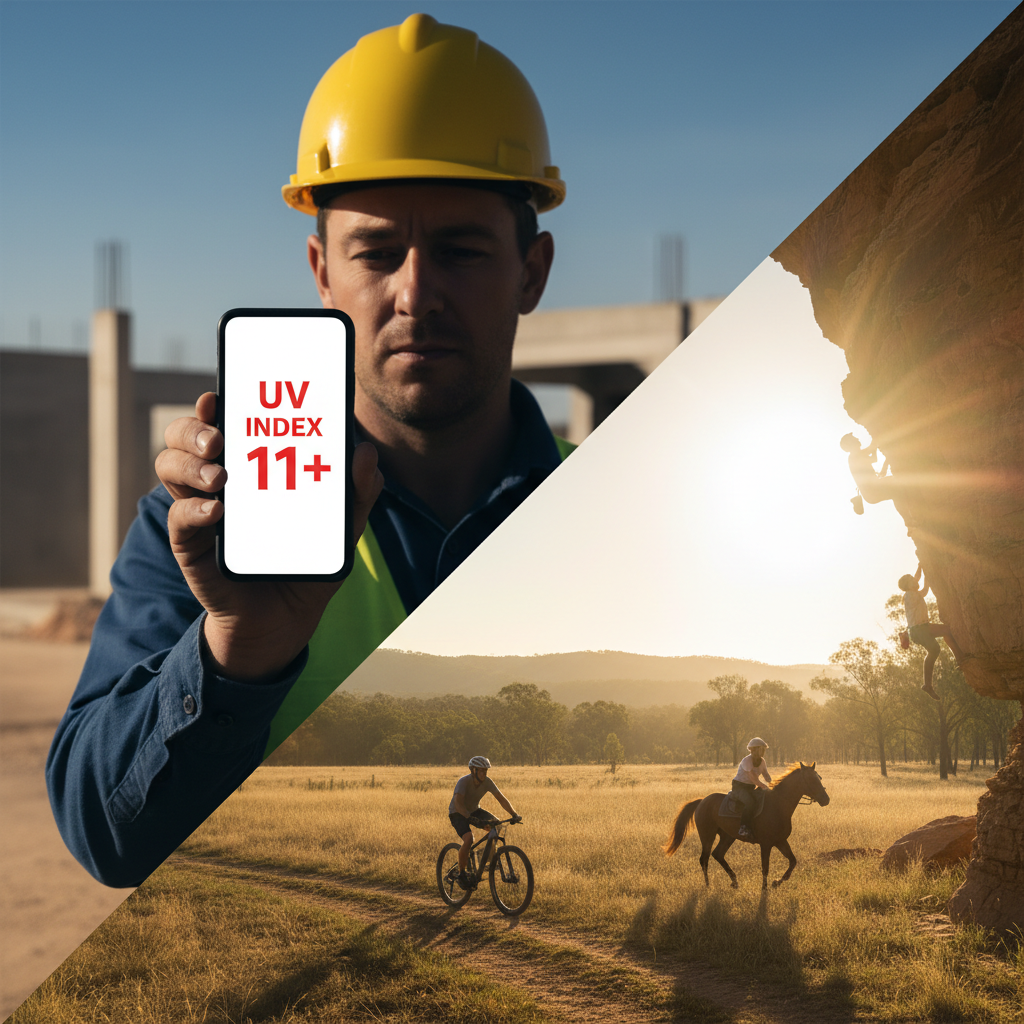
Helmet Head, Sunburnt Neck: Why Your Headwear Isn't Enough in the Aussie Sun
You're a dedicated outdoor worker. You're a committed athlete. You understand the importance of safety gear. You strap on your helmet every single day, knowing it’s crucial for preventing serious injury. But here’s the kicker: your helmet might be protecting your head, but it's probably doing a bang-up job of not protecting the rest of your face and neck from the relentless Australian sun.
We live in a beautiful country, but our sunshine comes with a serious side of UV radiation. You know those days when the UV index is hitting 7, 8, or even 11? In Australia, those days aren’t exceptions; they’re often the norm, especially during our long daylight hours. And while you’re focused on the job or your performance, those UV rays are busy causing damage.
The Invisible Threat: UV Damage Beyond the Helmet Line
Let's break down why your trusty helmet, on its own, isn't the ultimate sun shield you might think it is.
1. Limited Coverage
Helmets are designed for impact protection, not comprehensive sun coverage. Most standard helmets leave significant portions of your face exposed: your forehead, your cheeks, your nose, your ears, and crucially, your neck. These are prime real estate for UV damage.
2. Gaps and Sunlight Creep
Even with a helmet on, there are often gaps where the helmet meets your skin. Sunlight is insidious. It can creep around edges, bounce off surfaces, and penetrate those small openings. Think about the dappled sunlight through trees – UV radiation behaves similarly, finding its way through.
3. Long Exposure Times
Outdoor workers and athletes spend hours under the sun. A quick burst of UV might not seem like much, but cumulative exposure over an entire workday or training session adds up. This is where the real danger lies for Australians.
Who's at Risk? The Unseen Victims
If you spend any significant amount of time outdoors in Australia, you’re in the high-risk category. This includes:
Construction Workers: On site for 8+ hours a day, often with minimal shade.
Tradespeople: Electricians, plumbers, landscapers, roofers – constantly on the move under the open sky.
Farmers and Agricultural Workers: Long days in the fields, exposed to intense sunlight.
Road Workers and Surveyors: Directly exposed to the elements for extended periods.
Athletes and Recreational Sports Enthusiasts: Runners, cyclists, cricketers, surfers – even for shorter periods, the intensity of Aussie sun can still be damaging.
Lifeguards: An obvious group, but one that often relies on limited strategies out of necessity.
The Consequences: More Than Just a Sunburn
We all know sunburn stings. But the damage goes far beyond temporary redness and peeling. Chronic UV exposure contributes to:
Premature Skin Ageing: Wrinkles, leathery skin, sunspots (age spots) – all accelerated by UV damage.
Eye Damage: Cataracts and macular degeneration are linked to long-term UV exposure.
Skin Cancer: This is the big one. Australia has one of the highest rates of skin cancer in the world. Basal cell carcinoma, squamous cell carcinoma, and the deadliest form, melanoma, are all directly linked to UV radiation.
Your Helmet Isn't a Sunscreen Bottle: Bridging the Gap
So, what can you do? You can't exactly slather sunscreen on your helmet. And reapplying it constantly to your exposed skin can be a hassle, especially when you're sweating it off or working in dusty environments.
This is where practical, integrated sun protection solutions come in. You need something that works with your existing safety gear.
The Problem & The Solution: A Simple Equation
| Problem | Solution |
|---|---|
| Exposed Forehead/Face | A brim attachment that extends to shade your face, ears, and neck. |
| Sunlight Creep | A design that seals the gap between your helmet and your face, blocking UV rays from entering. |
| Inconvenience | A solution that's permanently attached, requires no messy application, and stays put during all your activities. |
| Lack of Neck Cover | An extension that drapes down your neck, a common burn zone for Australians. |
Practical Protection: What to Look For
When you're assessing your sun protection strategy, think about these practical factors:
Coverage Area: Does it cover your forehead, nose, cheeks, ears, and neck?
UV Rating: Is it made from UPF (Ultraviolet Protection Factor) rated material? Look for UPF 50+.
Durability: Can it withstand the rigours of your work or sport? Will it crack or break easily?
Compatibility: Does it fit securely with your specific helmet model?
Comfort: Will it add excessive heat or weight? Is it breathable?
Ease of Use: Is it quick to attach and detach? Does it interfere with your helmet's primary function?
Your Sun Safety Checklist for Outdoor Professionals and Athletes
Before you head out the door, run through this quick checklist. Tick off what you’ve got covered:
[ ] Helmet: Primary impact protection – check.
[ ] Long-sleeved UPF clothing: Covers arms and torso.
[ ] Sun-safe pants/shorts: Covers legs.
[ ] Sunscreen: Applied to all exposed skin (face, neck, hands).
[ ] Sunglasses: With UV protection for your eyes.
[ ] Wide-brimmed hat (if no helmet): Standard sun safety.
[ ] Helmet Brim Attachment: Specifically designed to extend coverage and block UV rays from your face and neck when wearing a helmet.
Don't skip this last point. For helmet wearers, it's the missing piece of the puzzle.
Installing Peace of Mind: How it Works
Think of a helmet brim attachment as a cap extension for your safety helmet. It’s designed to specifically address the sun protection gaps that standard helmets leave. The best ones are engineered to:
1. Securely Attach: They lock onto your helmet, ensuring they won’t fly off during physical activity or in windy conditions.
2. Provide Shade: They extend outwards, casting a shadow over your face and neck.
3. Block UV: They are made from UPF 50+ material, actively blocking harmful rays.
Step-by-Step: Adding Real Sun Protection
While most are designed for quick attachment, the process is typically straightforward.
Step 1: Identify Attachment Points: Most helmet brim systems will have clips or a specific mounting mechanism that aligns with your helmet’s existing features.
Step 2: Align and Secure: Position the brim onto your helmet, ensuring it’s centred. Press down firmly on the attachment points until you hear or feel them click into place.
Step 3: Test Stability: Gently tug on the brim to ensure it’s securely fastened. It should feel like a natural extension of your helmet, not a loose add-on.
Step 4: Check Coverage: Look in a mirror or have a colleague check that your forehead, cheeks, nose, and ideally, your neck are now well-shaded.
Step 5: Get Back to Work/Training: You’re now significantly better protected from the sun, without compromising your safety gear.
For detailed instructions specific to a product, always refer to the manufacturer's guide.
Overcoming Objections: 'I Don't Have Time' & 'It's Too Hot'
We hear you. "I'm too busy to mess with extra gear." "It'll just make me hotter."
Let’s tackle these head-on:
"I don't have time." How much time do you spend dealing with sunburn? Moisturising peeling skin? Seeing a doctor about a suspicious mole? The few seconds it takes to attach a brim are an investment. Plus, our products are designed for quick, one-time installation, meaning no fuss every single day. Check out our Products to see how simple they are. The initial How to Install guide takes minutes, and after that, it's just on.
"It'll make me hotter." This is a common misconception. While it adds a layer, a well-designed brim actually creates shade, reducing the direct heat from the sun on your face. Many are made from lightweight, breathable materials that don’t trap excessive heat. Think about standing in direct sun versus standing in the shade of a tree – the shade is cooler. A brim provides that personal shade.
"Sunscreen is enough." Sunscreen is vital, but it’s not foolproof. It degrades, sweats off, gets wiped off, and is often applied unevenly. Relying solely on sunscreen for prolonged outdoor exposure, especially in Australia with our high UV levels, is risky. A physical barrier like a brim provides consistent, passive protection.
"My helmet is good enough." As we’ve outlined, for impact protection? Yes. For comprehensive UV protection? No. It’s an essential piece of your kit, but it’s incomplete on its own when it comes to sun safety.
Don't Let the Aussie Sun Win
Your helmet is your primary defence against head injuries. Don't let it be the reason you suffer preventable UV damage. Protecting your face and neck from the sun is not a luxury; it’s a necessity in Australia. Investing in practical, integrated sun protection is as important as your helmet itself.
Visit our Products page today to find the right brim attachment for your helmet and take a significant step towards staying safe under the harsh Australian sun. For more tips and information, see our FAQ or explore other articles on our Blog.