
Helmet Brims: How Long Do They Really Last in the Australian Sun?
Understand the lifespan of your helmet brim, especially in harsh Aussie conditions. Learn how UV, heat, and wear affect its durability and when it's time for a replacement.
Helmet Brims: How Long Do They Really Last in the Australian Sun?
As an Aussie, you know the sun. It’s a glorious part of our lifestyle, but it’s also relentless. Whether you're on a worksite, a bike path, or out for a hike, your helmet is your best mate for safety. But what about the brim? That crucial piece of your helmet offering shade and protecting your face from harsh UV rays – how long is it actually designed to last, especially under the intense Australian sun?
Let’s cut to the chase: there’s no single, definitive answer to how long a helmet brim will last. However, we can give you a practical, no-fluff guide based on real-world conditions, particularly here in Australia. The answer hinges on a few key factors, and understanding them can save you time, money, and most importantly, keep you protected.
The Silent Killer: UV Radiation
Australia boasts some of the highest UV levels in the world. This isn't just about getting a tan; it’s about material degradation. Plastics and polymers, the materials most commonly used for helmet brims, are susceptible to breaking down when exposed to prolonged UV radiation. Over time, UV rays can:
Make material brittle: What was once flexible can become prone to cracking and shattering.
Cause discolouration: Fading is a visual cue that the material is weakening.
Reduce structural integrity: A brittle brim is less likely to withstand minor impacts or everyday bumps.
Think of it like leaving a plastic garden chair out in the Aussie sun for years. Eventually, it gets chalky and brittle. Your helmet brim faces the same battle, albeit often with more robust materials.
Heat and Environmental Factors
Beyond UV, extreme heat is another enemy. Australia’s summer days can easily push past 40°C, and this heat, combined with sunlight, accelerates the degradation process. Repeated cycles of heating up and cooling down can also put stress on the material.
Added environmental factors like dust, dirt, salt spray (if you’re coastal), and even certain chemicals can contribute to wear and tear. While a helmet brim isn’t subjected to the same stresses as, say, a tyre, it’s still an outdoor piece of equipment enduring a tough climate.
How Long Can You Expect a Standard Helmet Brim to Last?
This is where we get practical. For a standard, non-replaceable helmet brim that comes with your helmet, you’re looking at the lifespan of the helmet itself. Most safety helmet manufacturers recommend replacing your helmet every 3-5 years, depending on usage and conditions. The brim is an integral part of that helmet’s structure and has a similar expected lifespan.
However, with an attachable brim like the DA BRIM, the equation changes. These are designed as accessories, often made from high-quality, UV-resistant materials. They are built to withstand significantly more UV exposure than the standard plastic visor you might find on some helmets. And importantly, they are replaceable.
The DA BRIM Advantage: Replaceable Protection
This is why accessories like DA BRIM exist. Instead of replacing an entire helmet because a part of it has degraded, you can simply replace the brim. This is not only more cost-effective but also more sustainable.
So, how long does a DA BRIM last?
Under typical Australian conditions, a DA BRIM, made from UV-stabilised polymers, is designed to offer at least 1-2 years of consistent, heavy use before significant degradation might occur. Some users report them lasting longer, especially if they take good care of them. This is significantly longer than a non-replaceable, integrated visor on certain helmet types might survive the harsh UV.
Why the difference? DA BRIMs are specifically engineered for sun protection. They use materials chosen for their resilience to UV and heat. Plus, because they are designed to be a separate, replaceable component, they can be made from materials that prioritize UV resistance over the structural integrity requirements of the main helmet shell.
Signs Your Helmet Brim Needs Replacement
Regardless of whether it’s integrated or an accessory, you need to know the warning signs. Don’t wait for it to fail completely. Look out for:
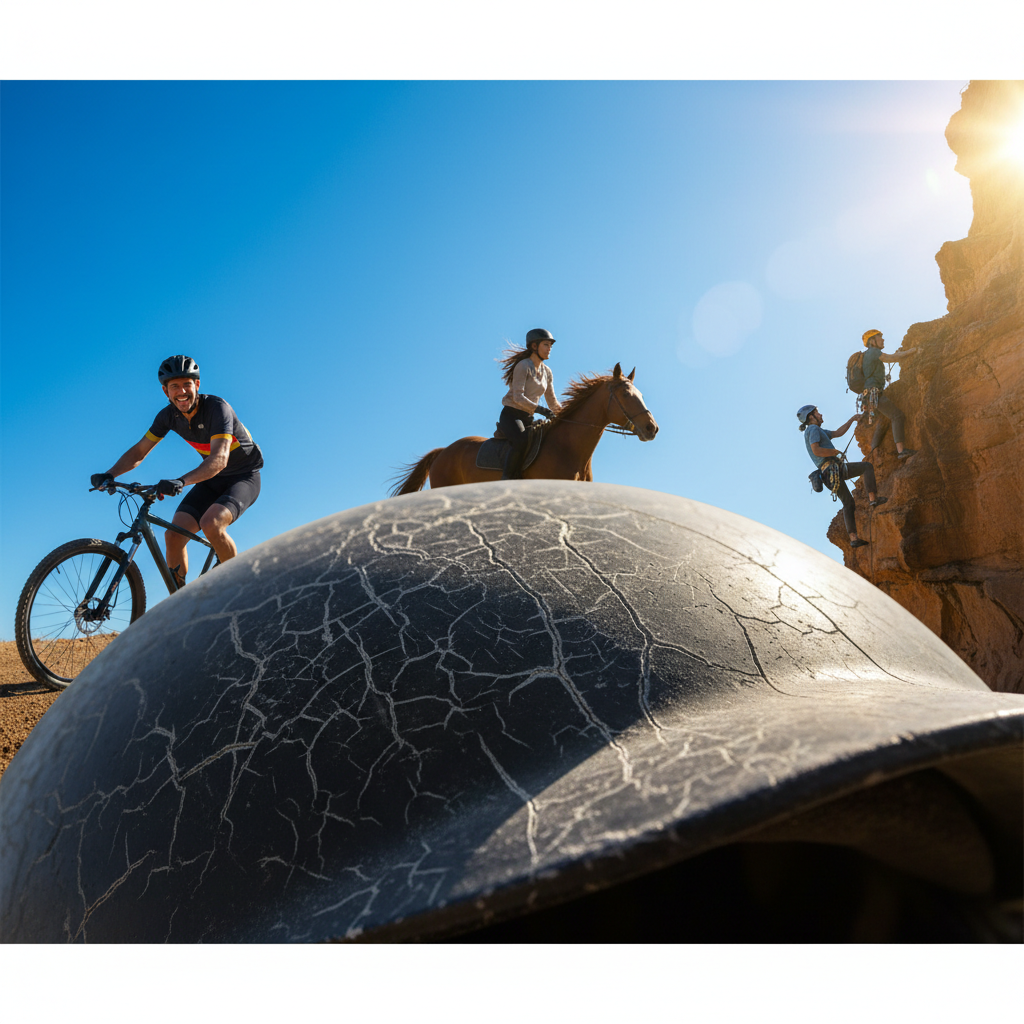
Cracking or brittleness: If the brim feels stiff, or you see hairline cracks forming, especially along edges or stress points, it’s time.
Significant discolouration: While some fading is normal, if the brim has gone chalky white or significantly discoloured, it’s a strong indicator of material breakdown.
Warping or deformation: If the brim is no longer sitting straight or has lost its shape, it’s compromised.
Impact damage: Even a small ding can weaken the material. If you notice any dents or scuffs that look like they’ve compromised the material, err on the side of caution.
When to Replace Your Integrated Helmet Brim
If your helmet brim is part of the helmet itself and shows signs of wear:
Assess the damage: Is it a minor scratch, or is the material brittle and cracked?
Consider the helmet’s age: If your helmet is already nearing its 3-5 year replacement window, a damaged brim is a strong reason to upgrade the whole unit.
Safety first: If the brim is compromised, the overall protection of the helmet might be too. It’s often not possible to replace just the integrated brim. Therefore, you’ll likely need to replace the entire helmet.
You can learn more about helmet safety and replacement cycles in our FAQ section.
When to Replace Your DA BRIM
This is where the system shines. When your DA BRIM shows any of the signs mentioned above, you don’t need a new helmet. You can simply purchase a replacement brim.
Key Benefits of DA BRIM Replacement:
Cost-effective: Cheaper than a whole new helmet.
Sustainable: Reduces waste.
Convenient: Quick and easy to swap out.
Consistent Protection: Ensures you always have maximum sun protection.
How to Install DA BRIM (If You Need a Replacement)
Swapping out a DA BRIM is a breeze. We’ve designed it for simplicity. For a detailed, step-by-step guide, always refer to our dedicated How to Install page. Here’s a quick rundown:
1. Remove the old brim (if still attached): Gently detach the old brim from your helmet. Most DA BRIMs use a robust attachment system designed for security but ease of removal.
2. Clean the helmet rim: Wipe down the area on your helmet where the brim attaches to ensure a clean fit.
3. Align the new brim: Position the new DA BRIM over the helmet rim, ensuring it’s correctly oriented.
4. Secure the brim: Following the specific instructions for your DA BRIM model, engage the fastening mechanism until it's firmly locked in place.
It really is that simple. Most people can do this in under a minute.
Maximising the Lifespan of Your Helmet Brim
To get the most out of your helmet brim, whether it’s integrated or a DA BRIM, follow these tips:
Storage
Avoid direct sunlight when not in use: Store your helmet in a cool, dry place away from prolonged direct sun exposure. A helmet bag or cupboard is ideal.
Keep it away from heat sources: Don’t leave your helmet in a hot car, on a dashboard, or near heaters.
Cleaning
Use mild soap and water: For regular cleaning, a soft cloth with mild soap and water is best. Avoid harsh chemicals or abrasive cleaners.
Rinse thoroughly: Ensure all soap residue is removed.
Air dry: Let the helmet and brim air dry completely before storing.
Handling
Be mindful of bumps and drops: While your helmet is designed to protect you from impacts, treat it with care when not in use.
Don’t use it as a stand: Avoid placing your helmet upside down on surfaces that could scratch or damage the brim.
Are All Helmet Brims Created Equal?
No. The materials and manufacturing quality can vary wildly. What might seem like a bargain from an unknown brand could be made from inferior plastic that degrades quickly under the sun. When choosing an accessory brim, look for:
UV-resistant materials: Specifically stated by the manufacturer.
Reputable brands: Brands known for quality and durability.
Good reviews: What do other users, especially those in sunny climates, say?
Our Products line is designed with these considerations in mind, offering robust solutions for extended sun protection.
Quick Checklist: When to Consider Replacement
[ ] Cracked or brittle material detected.
[ ] Significant, chalky discolouration.
[ ] Brim has warped or lost its shape.
[ ] Helmet is showing signs of age (3+ years).
- [ ] Brim has sustained impact damage.
If you’ve checked more than one or two of these, it’s probably time to think about a replacement. For DA BRIM users, this means a new brim; for others, it might mean a whole new helmet.
The Bottom Line
Your helmet brim is a vital part of your sun protection strategy. In Australia, where UV and heat are significant factors, material degradation is inevitable. While an integrated brim might mean replacing your entire helmet, accessories like DA BRIM offer a smart, cost-effective, and sustainable solution.
By understanding the signs of wear and storing and cleaning your gear properly, you can maximise its lifespan. But when it's time, don't hesitate. Replace it. Your face and eyes will thank you for it.
For more information on our range of protective accessories, explore our Products page, or check out our Blog for more insights. If you have specific questions about DA BRIM, our FAQ is a great resource.