
Helmet Brims and Aerodynamics: Busting Myths for Aussie Cyclists
Does that helmet brim ruin your speed? We cut through the noise to give you the practical, no-nonsense truth about helmet brims, aerodynamics, and staying sun-safe on Australian roads.
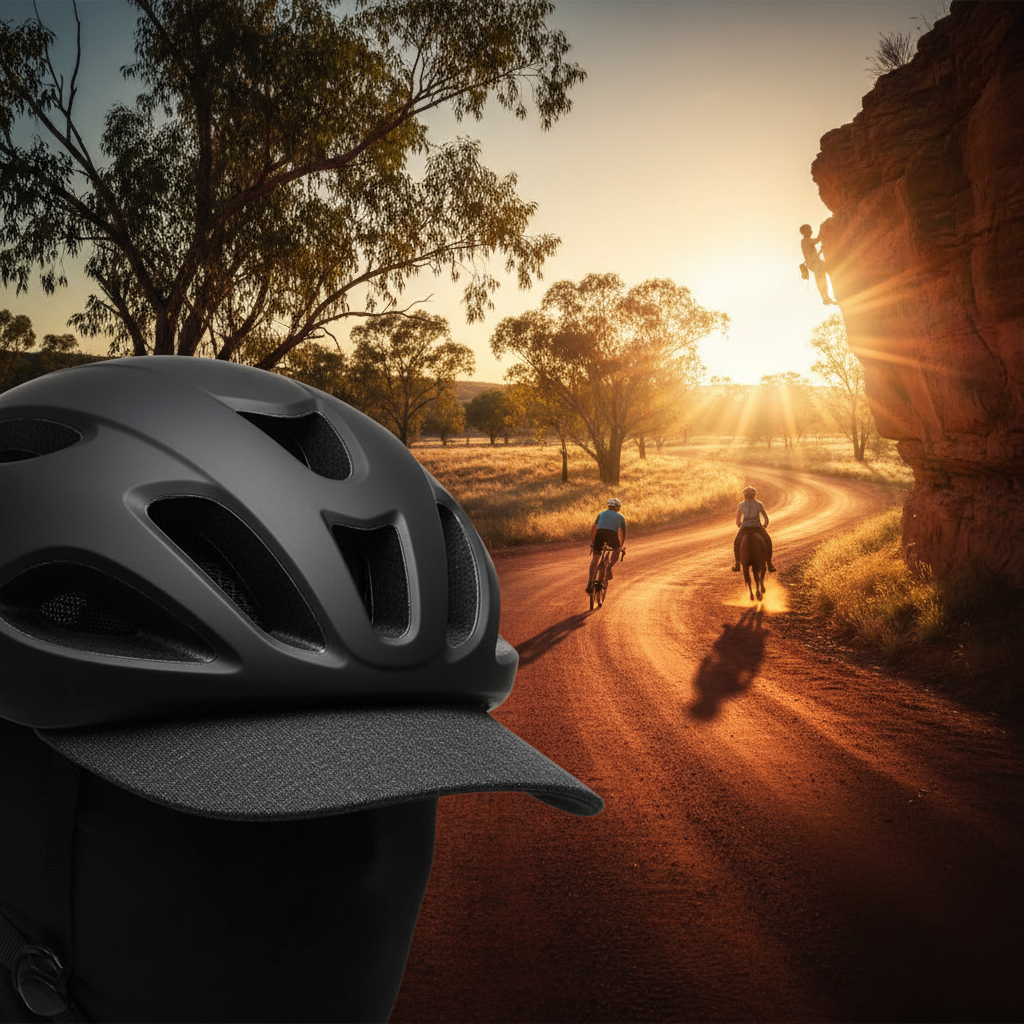
Helmet Brims and Aerodynamics: Busting Myths for Aussie Cyclists
Let's cut to the chase. You're out there, enjoying the ride, feeling the breeze. Then the sun starts to beat down, and you start thinking about that helmet brim. Does it actually slow you down? Is it adding drag? For Australian cyclists, especially, this is more than just a curiosity. It's about practical sun protection in a country where the UV index can be brutal, even on cloudy days. And with our long, beautiful coastlines and sprawling country roads, you can spend a lot of time exposed.
We're not here to sell you snake oil or make lofty claims about shaving seconds off your personal best. We're here to give you the facts, plain and simple, so you can make an informed decision about how you protect yourself from the harsh Australian sun while you're on your bike.
The Big Question: Do Helmet Brims Affect Aerodynamics?
This is the million-dollar question, and the answer isn't a simple yes or no. It's nuanced, and it depends.
The 'Aerodynamic' Argument (and why it's often overstated)
Some people believe that any addition to a helmet, no matter how small, will inevitably create drag and slow you down. This is the basis of the argument against helmet brims. The theory is that the brim disrupts airflow, creates turbulence, and essentially acts like a small sail.
In a highly controlled, professional racing environment, where every millisecond counts and riders are pushing the absolute limits of human performance and equipment technology, these factors can matter. Think Tour de France riders, peloton dynamics, and wind tunnel testing.
However, for the vast majority of cyclists – commuting, recreational riding, touring, or even amateur racing in Australia – the impact of a well-designed helmet brim on aerodynamics is negligible. Here's why:
Speed is Key: Aerodynamic drag increases exponentially with speed. If you're not riding at professional racing speeds (consistently over 40-50 km/h), the amount of drag created by a brim is minimal compared to other factors like your body position, clothing, and even the road surface.
Head Position Matters More: How you hold your head and body on the bike has a far greater impact on aerodynamics than a minor addition like a brim. A tucked-in position with your head down will have a much larger aerodynamic effect than any perceived drag from a brim.
Design Plays a Role: Not all brims are created equal. Many modern helmet brims, especially those designed for cycling, are shaped to minimise disruption. They are often relatively small and follow the natural curve of the helmet.
The Benefits Often Outweigh the 'Cost': We'll get to this, but the benefits of sun and rain protection are significant, especially in Australia.
The Real-World Impact
In the real world, on an average Australian road, it's highly unlikely you'll notice any difference in speed or performance due to a helmet brim. Instead, you'll likely notice the considerable benefits.
Why Brims Are a Smart Choice for Aussie Cyclists: Beyond Aerodynamics
Let's talk about what a helmet brim actually does, and why it's a practical advantage, particularly for us Aussies.
Sun Protection: Your First Line of Defence
Australia has some of the highest UV levels in the world. Prolonged exposure, even on cooler days, can lead to sunburn, premature skin ageing, and increased risk of skin cancer. A helmet brim provides:
Shade for Your Face: It directly shields your eyes, forehead, and nose from direct sunlight. This reduces glare, making it easier to see the road clearly.
Reduced UV Exposure: By blocking direct UV rays, it significantly reduces your exposure to harmful radiation on sensitive facial skin.
Comfort on Hot Days: Less sun hitting your face means less heat absorbed, making your ride more comfortable.
Rain Protection: Staying Dry When It Counts
We're not just talking about tropical downpours. Even a light shower can be annoying and impair visibility. A brim helps:
Keep Rain Out of Your Eyes: This is crucial for maintaining clear vision and control, especially when descending or riding in traffic.
Divert Water: It can help channel rain and spray away from your face and eyes.
Protection from Debris
Whether it's low-hanging branches on a bush trail or debris kicked up by other vehicles on the road, a brim can offer a small but useful layer of protection.
Addressing Common Objections
We've heard it all. Let's tackle the common concerns head-on:
Objection 1: "It looks silly/unprofessional."
Our Take: Looking good is subjective. Staying safe and comfortable is objective. For everyday riding, commuting, or enjoying a scenic route, practicality trumps perceived aesthetics. If you're competing at a professional level, you'll likely have specific equipment regulations and highly optimised gear. For everyone else, a brim is a sensible choice. We offer a range of styles that integrate seamlessly with most helmets. Check out our Products page for options.
Objection 2: "It will get caught on things."
Our Take: This is a valid concern, especially for mountain biking or riding in overgrown areas. However, most cycling-specific helmet brims are designed to be relatively short and often have a breakaway design, meaning they'll detach rather than causing an accident if they snag. For road cycling, the risk is significantly lower. If you're unsure, consider our lighter, more minimalist designs.
Objection 3: "It's too hot / makes my head sweat more."
Our Take: This is largely a myth. Modern helmets have excellent ventilation systems. The brim sits away from your scalp and doesn't impede airflow through the helmet vents. In fact, by reducing direct sun on your head, it can help keep you cooler overall. The perceived increase in heat is often due to the psychological effect of 'feeling' something there, rather than actual heat build-up. Our brims are designed with breathability in mind.
The Aerodynamics vs. Safety Trade-off (It's Not Really a Trade-off)
Let's be blunt. If you are a professional cyclist competing in a time trial or track event where every single watt of power and every tenth of a second is critical and you're riding at speeds exceeding 50 km/h, then yes, any added surface area could theoretically introduce drag. For these elite scenarios, specialised aero helmets with minimal or no brims are designed. We understand that. But for 99% of cyclists in Australia, this isn't your reality.
What is your reality? The scorching sun, and the need for protection. The risk of sunburn, eye strain, and long-term skin damage is a far greater concern for your health and well-being than a minuscule aerodynamic penalty. The benefits of increased comfort, improved visibility, and crucial UV protection far outweigh any theoretical loss in speed that you're unlikely to even notice.
Think of it this way: The energy you save by not squinting into the sun, or the comfort you gain on a long ride, might actually translate to better endurance and focus, ultimately benefiting your performance more than shedding a gram of drag.
Practical Tips for Using Helmet Brims
Choosing the Right Brim
When selecting a brim, consider:
Your Riding Style: Road cycling? Mountain biking? Commuting? Each might benefit from a slightly different brim size or design. Our Products page can help you choose.
Your Helmet: Ensure compatibility. Most brims attach to the front vent or a specific mounting point. Refer to our How to Install guide.
Weather Conditions: Brighter, sunnier days might call for a slightly larger brim for maximum shade.
Installation and Maintenance
Installation is usually straightforward. Most brims designed for aftermarket use attach easily without tools. Always follow the manufacturer's instructions. For our products, we've made it simple. See our How to Install guide.
Regular cleaning with mild soap and water will keep your brim in good condition.
When to Use Your Brim
We advocate for year-round use in Australia.
During Daylight Hours: Absolutely. The sun is a constant threat.
On Sunny Days: Obvious. Maximum shade benefit.
On Cloudy Days: Don't be fooled. UV rays penetrate clouds. A brim still offers protection.
During Rain: Essential for visibility.
Quick Checklist: Is a Helmet Brim Right for You?
[ ] Do you ride outdoors in Australia?
[ ] Are you concerned about sun exposure and UV rays?
[ ] Do you want to reduce glare and improve visibility?
[ ] Would you like extra protection from rain and debris?
[ ] Do you prioritise practical comfort and safety over theoretical minuscule aerodynamic gains?
- [ ] Do you ride primarily for commuting, recreation, touring, or amateur sport?
If you answered yes to most of these, a helmet brim is a no-brainer.
The Verdict: Practicality Wins
For the vast majority of Australian cyclists, the question of whether a helmet brim affects aerodynamics is less important than the undeniable benefits it provides. The slight, almost imperceptible aerodynamic difference is dwarfed by the significant advantages in sun protection, glare reduction, and rain defiance. In a country like Australia, where UV radiation is a serious health hazard and riders often face long, exposed journeys, a helmet brim isn't a fashion statement or a hindrance – it's a practical tool for safety and comfort.
Don't let myths about aerodynamics deter you from making a smart, practical choice that protects your health and enhances your riding experience. Our range of helmet brims is designed to be lightweight, easy to attach, and effective. Explore our Products today and ride safer and sunnier.
If you have more questions, our FAQ page is a great resource, or check out more articles on our Blog.