
Helmet Brim vs. Neck Flap: Which Sun Protection Method Actually Works?
Stop guessing. We break down helmet brims and neck flaps for Australian sun conditions. Get practical advice to block UV and stay cool.
Helmet Brim vs. Neck Flap: Which Sun Protection Method Actually Works?
If you wear a helmet in Australia, you know the sun can be brutal. We’re talking UV indexes that climb into the extreme, relentless heat, and days that stretch on forever. Protecting your skin, especially your face and neck, from harmful UV rays and that baking heat is non-negotiable. But when it comes to aftermarket sun protection for your helmet, what’s the real winner: a wide brim or a neck flap?
Let’s cut to the chase. This isn't about fashion; it's about practical, effective sun defence. We're going to lay out the facts, handle your potential objections, and help you decide which is the best solution for your needs.
Understanding the Threat: Australia's Sun
Before we compare, let's get real about our sun. Australia consistently has some of the highest UV radiation levels in the world. Even on cloudy days, up to 90% of UV rays can penetrate. In summer, the UV index frequently hits 11 or higher, which is classified as ‘extreme’ and can cause skin damage in as little as 10 minutes. Add to that prolonged exposure during work, outdoor activities, or commutes, and you've got a recipe for sunburn, premature ageing, and increased skin cancer risk.
Your helmet offers impact protection, but it often leaves significant areas exposed to the sun's onslaught.
The Helmet Brim: Your First Line of Defence
A helmet brim, often referred to as a visor or extension, attaches to the front of a helmet to project forward. Think of it like the brim on a cap or a wide-brimmed hat, but designed specifically to integrate with your helmet.
How it Works:
A good brim shades your entire face, particularly your forehead, eyes, and nose. This is crucial because these are often the first areas to burn, and direct sun in your eyes drastically reduces visibility and comfort.
Pros (in Australian Conditions):
Direct Face and Eye Shade: This is its primary function and where it excels. It actively blocks direct sunlight from hitting your sensitive facial skin and sunglasses, reducing glare and eye strain. This is vital for safety and comfort, especially when driving, cycling, or operating machinery.
UV Blockage for Forehead and Nose: These areas are often the most exposed and prone to burning. A brim provides immediate shade.
Rain and Debris Protection: While not its primary goal, a brim also offers a degree of protection from light rain and dust, which can be a bonus.
Easy to Integrate: Modern brims are designed for simple attachment, often clipping or screwing on without tools.
Improved Visibility: By reducing glare, your vision is clearer and less fatigued.
Cons (and How to Overcome Them):
Limited Neck Coverage: The main drawback. A brim offers minimal to no protection for the back of your neck. You’ll still need sunscreen or another method for this area.
Potential for Snagging (Depending on Design): A very large or poorly designed brim could potentially snag on something, although this is less common with well-engineered products.
Aesthetics: Some people might feel it changes the look of their helmet. However, when focused on practical sun protection, this is secondary.
When a Brim is Likely Your Best Bet:
You spend a lot of time looking forward (e.g., cycling, motorcycling, driving a golf cart, operating tractors).
You experience significant glare that impacts your vision or comfort.
You want immediate, reliable shade for your face.
You're willing to use separate sun protection (like sunscreen or a cap under your helmet) for your neck.
The Neck Flap: Covering Vulnerable Skin
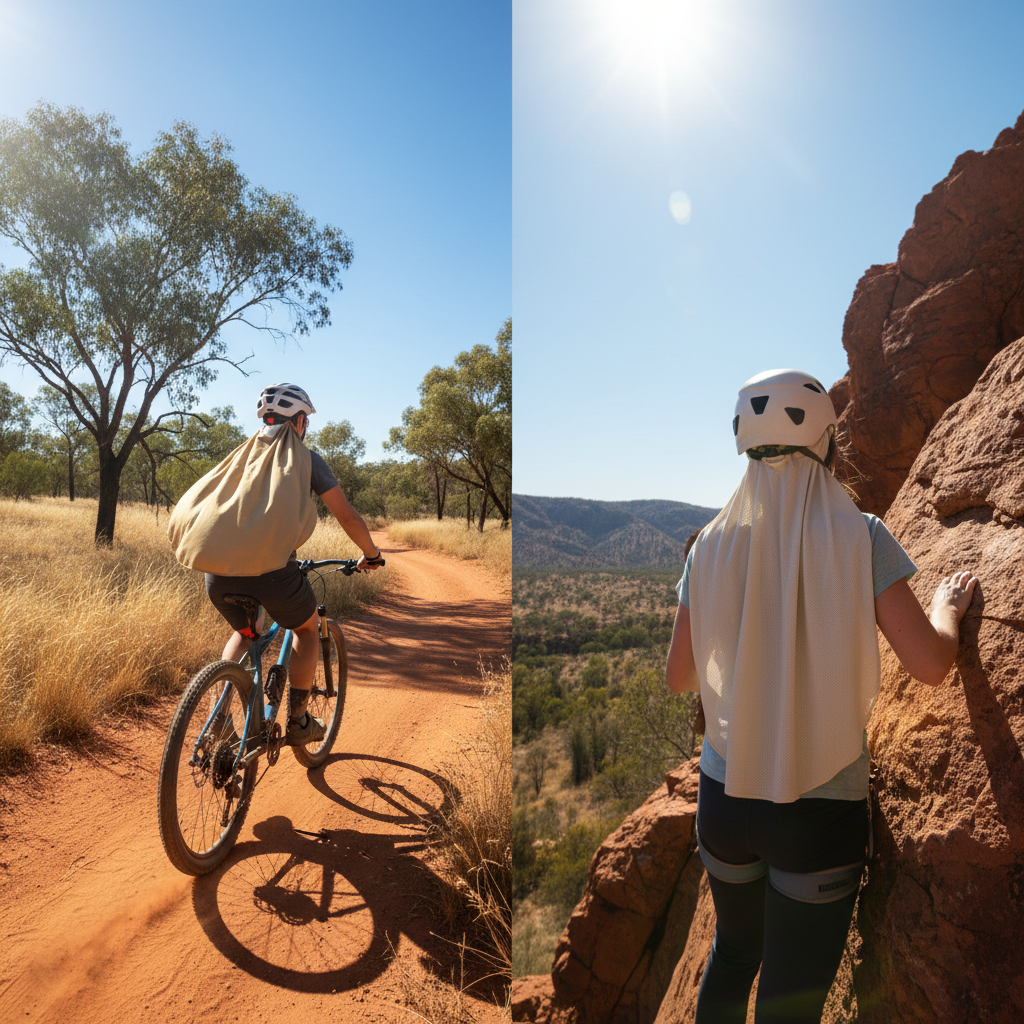
A neck flap, often called a neck shade or neck guard, is typically a fabric extension that attaches to the rear or sides of a helmet, hanging down to cover the back of your neck and sometimes your shoulders.
How it Works:
Neck flaps are designed to shield the skin on your neck and upper back from direct sun. This area is particularly vulnerable as it’s often exposed when looking down or when your helmet doesn't offer full coverage at the back.
Pros (in Australian Conditions):
Excellent Neck Coverage: This is their strength. They protect a large area of skin that brims miss.
UV Protection for the Back: Essential for preventing sunburn on the nape of your neck, a common burn spot.
Can Offer Some Shoulder Protection: Depending on the size and shape, they can extend to cover upper shoulders.
Breathable Options Available: Many are made from lightweight, breathable fabrics that can help with airflow.
Cons (and How to Overcome Them):
No Face or Eye Shade: This is the glaring omission. A neck flap does nothing to protect your eyes or face from direct sunlight or glare.
Reduced Visibility: Some styles can obscure your peripheral vision or make it harder to see what's directly behind you.
Can Trap Heat: While some are breathable, a flap hanging down can sometimes trap hot air and increase your feeling of heat, especially in very humid conditions.
May Not Stay in Place: Depending on the attachment mechanism and activity, a lighter flap could shift or blow around.
When a Neck Flap is Likely Your Best Bet:
Your primary concern is protecting your neck and upper back from sun exposure.
Your helmet provides sufficient front-facing shade but leaves your neck exposed.
You are already using a separate solution for face/eye shade (e.g., a wide-brimmed hat worn under the helmet if compatible, or diligent sunscreen use).
Direct Comparison: Key Differences
| Feature | Helmet Brim | Neck Flap |
|---|---|---|
| Primary Focus | Face, eyes, forehead, nose | Back of neck, upper back |
| UV Protection | Excellent for face and forward | Excellent for neck and rear |
| Glare Reduction | Significant | None |
| Heat Management | Can slightly increase front heat | Can trap heat towards the back |
| Visibility | Can improve by reducing glare | Can sometimes reduce peripheral vision |
| Coverage Area | Front of head | Rear and sides of head/neck |
| Australian Sun Context | Crucial for reducing UV on face and eyes during high UV periods | Essential for preventing neck burns during long, sunny days |
Can You Have Both? The Hybrid Approach
The most effective approach often involves combining solutions. For Australian conditions, this means acknowledging that neither a brim nor a flap alone provides complete protection. Many people find that by using a good helmet brim and diligent sunscreen application to their neck (or a lightweight neck gaiter/flap), they achieve comprehensive coverage.
However, some helmets and aftermarket accessories are designed to offer a more integrated solution. For instance, a helmet with a deep, built-in brow, combined with an attachable brim and a separate neck shade, provides dual-layer protection where you need it most.
Overcoming Objections
Objection 1: "I just wear sunscreen."
Sunscreen is essential, but it’s not foolproof. It washes off with sweat, requires constant reapplication (which can be difficult in the field), and you can easily miss spots, especially on your neck and ears. Plus, sunscreen doesn't stop glare from hitting your eyes, which affects visibility.
Objection 2: "It looks silly / it will make me look like a mushroom."
Your health and comfort are paramount. Furthermore, modern helmet accessories are designed to be functional and often look quite integrated when properly fitted. The goal is effective protection, not winning a style contest. Practicality trumps aesthetics when facing extreme UV.
Objection 3: "It will be too hot / it will make me sweat more."
This is a valid concern. However, many modern brims and neck flaps are made from lightweight, breathable materials. The discomfort from heat is often less than the discomfort and damage from severe sunburn. Choosing the right material and design can mitigate this. For example, a brim that allows airflow underneath is better than a solid visor.
Objection 4: "It’s too complicated to install."
Most aftermarket products, especially those designed for common helmet types, are engineered for easy, tool-free installation. Check out our guide on How to Install to see how simple it can be.
Making Your Choice: A Practical Checklist
To help you decide, ask yourself these questions:
What is my primary exposure area? (Face/eyes vs. neck/upper back)
What type of activity am I doing? (Cycling, construction, gardening, hiking, motorcycling?)
How much direct sun do I typically experience? (High UV index days are common in Australia).
What is my current sun protection strategy? (Am I only reliant on sunscreen?)
Am I willing to use multiple layers of protection? (e.g., brim + sunscreen for neck)
What is my budget? (Both options are generally affordable, but prices vary).
Does my helmet have any built-in features for sun protection?
The Verdict: Prioritise Your Needs
There’s no single ‘best’ answer that fits everyone. The choice between a helmet brim and a neck flap, or a combination thereof, hinges on your specific needs and how you use your helmet.
For direct face shade, glare reduction, and protection of your eyes and forehead, a helmet brim is superior. It's your first defence against the sun hitting you directly from the front.
For covering the vulnerable skin on your neck and upper back, a neck flap is the clear winner.
Given Australia's intense sun and long daylight hours, often the most sensible approach is a combination. A good brim will handle your face and eyes, while you manage your neck and any other exposed skin with sunscreen or a dedicated neck shade.
If you're looking for a robust, practical brim designed for direct sun protection, explore our range of Products. Remember, investing in effective sun protection like a helmet brim is not just about comfort; it's a critical step in preventing long-term skin damage. Don't leave your face and neck to chance in the harsh Australian sun. Check our FAQ for more common questions and explore our Blog for further advice.