
Helmet Brim Lifespan: What to Expect Down Under
Understand how long your helmet brim should last in brutal Australian conditions and what to look for as signs of wear. Protect your skin and your investment.
Helmet Brim Lifespan: What to Expect Down Under
So, you've got a helmet. Good on ya. Now, you're probably thinking about how to make it even better, especially when you're out in the harsh Australian sun. That's where a helmet brim comes in. It’s not just about looking good; it’s about practical sun protection for your face, ears, and neck. But like anything exposed to our relentless UV rays and blistering heat, it won't last forever. Let's get down to brass tacks: how long should you expect your helmet brim to hold up?
The Harsh Reality of Australian Conditions
Australia. We love it. The beaches, the bush, the great outdoors. But we also live under some of the highest UV radiation levels in the world. Combine that with long days where the sun beats down relentlessly, especially during summer, and you've got a recipe for serious wear and tear on anything exposed.
Your helmet brim, whether it’s a factory-fitted part or an aftermarket addition like DA BRIM, is directly in the firing line. This isn't Europe where the sun takes a siesta in the afternoon. This is Australia. That means:
High UV Index: Consistently higher UV readings, even on cloudy days, degrade materials faster.
Intense Heat: High temperatures can warp, fade, and make plastics brittle over time.
Long Exposure: Many of us spend hours outdoors for work or recreation, multiplying the sun's impact.
Environmental Factors: Dust, salt spray (if you're near the coast), and even rain can contribute to degradation.
So, when you ask, "How long should a helmet brim last?" the honest answer isn't a single number. It depends. But we can give you a realistic expectation and tell you what to watch out for.
Factors Affecting Helmet Brim Lifespan
Think of your helmet brim as a soldier on the front lines of sun protection. It's taking a beating so you don't have to. Here's what influences how long that soldier stays effective:
Material Quality: Not all brims are created equal. High-quality, UV-resistant plastics and composites will naturally last longer.
Frequency of Use: If your helmet is on your head every day, all day, it's going to wear out faster than one used only occasionally.
Storage: Leaving your helmet and its brim in direct sunlight when not in use – like on the dashboard of your ute or leaning against a brick wall – will drastically shorten its lifespan.
Maintenance: A quick wipe down can prevent abrasive dust and grit from scratching the surface, which can lead to micro-fractures.
Impacts: While a brim is designed for sun protection, accidental knocks against hard surfaces can cause cracks or breaks.
Realistic Lifespan Expectations
Given Australian conditions, a good quality helmet brim designed for sun protection should realistically last anywhere from 1 to 3 years of regular, daily use.
1 Year: You might see significant fading, minor stress marks, or a slight loss of rigidity if you're in extremely harsh, constant sun or if the material quality is lower.
2-3 Years: This is a more common timeframe for a durable brim to remain functional and structurally sound, although some cosmetic fading is likely.
Beyond 3 Years: It's possible, especially with good care and less intense daily exposure, but you'll definitely be seeing signs of age.
This is a general guideline. Some may last longer, some shorter. The key is to know what to look for, not just rely on a calendar.
Signs Your Helmet Brim Needs Replacing
Don't wait for your brim to snap off or miraculously disappear. Look for these visual and tactile cues that it's time for a fresh one:
Visual Indicators:
Fading: The colour is significantly lighter or patchy compared to when it was new. This is a clear sign UV damage has occurred.
Chalky Surface: The plastic might appear dull, dusty, or develop a powdery residue that won't wash off. This indicates the surface polymers are breaking down.
Cracks or Splits: Look closely for hairline cracks, especially around attachment points or the edges. Even small cracks compromise structural integrity.
Brittleness: The material might look less flexible and more prone to snapping. If it feels stiff and unyielding, it's likely degrading.
Warping: The brim might no longer sit flat or straight, potentially affecting its protective coverage.
Tactile Indicators:
Flexibility Loss: It feels overly stiff and rigid, rather than having a slight give.
Roughness: The surface feels rough or gritty, even after cleaning, a sign of surface degradation.
Loose Fit: If the brim is becoming loose or is difficult to keep securely attached, the attachment points might be worn or the brim itself is distorted. If you've got a DA BRIM, and it's loose, it's time to re-evaluate. Check out our How to Install guide to ensure it's snug.
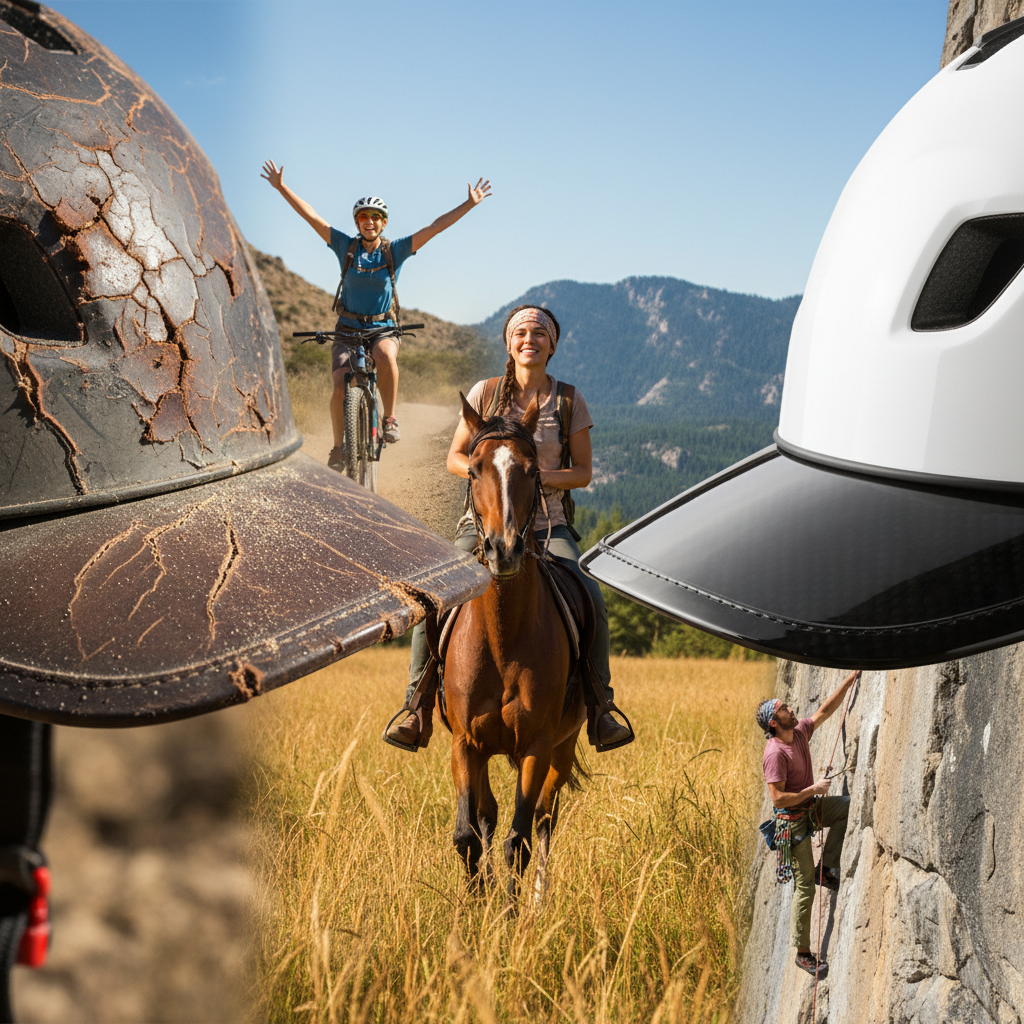
A Quick Comparison: New vs. Worn
| Feature | New Helmet Brim | Worn Helmet Brim (Australian Conditions) |
|---|---|---|
| Colour | Vibrant, consistent | Faded, patchy, chalky |
| Flexibility | Slight, controlled flex | Stiff, brittle, can be overly rigid |
| Surface | Smooth, consistent feel | Can be rough, gritty, chalky, or developing cracks |
| Integrity | Strong, no visible damage | Potential for hairline cracks, warping, or splits |
Protecting Your Investment (and Your Skin!)
While we can't stop time or the sun entirely, you can extend the life of your helmet brim and ensure it's always providing maximum protection. Here’s how:
Store Smart: Never leave your helmet in direct sun when not in use. Store it in a shade, a helmet bag, or even inside your vehicle (but not on the dash!).
Clean Gently: Use a damp cloth with mild soap to clean your brim. Avoid harsh chemicals or abrasive scrubbers that can damage the surface.
Regular Inspection: Make it a habit to check your brim for those tell-tale signs of wear and tear. A quick once-over when you’re cleaning your helmet is all it takes.
Choose Quality: Invest in a reputable helmet and a high-quality brim. Products designed with UV resistance in mind and made from robust materials will naturally perform better for longer. If you're looking for superior sun protection, check out our range of products.
When is it Time to Replace?
This is the critical question. Don't be a hero trying to squeeze every last day out of a degraded brim. If you notice any of the following, it's time for a replacement:
Visible Cracks: Even small ones. They will only get worse and can lead to sudden failure.
Significant Brittleness: If it feels like it could snap with moderate pressure, it's a major risk.
Compromised Fit: If it no longer attaches securely and reliably.
Severe Fading and Chalkiness: This indicates deep UV degradation, meaning the material's structural integrity is compromised.
Your helmet brim is a vital piece of sun safety equipment. Treating it as such means understanding its limitations and knowing when it's served its purpose.
The Bottom Line: Durability and Vigilance
So, how long should your helmet brim last? In Australia, aim for 1-3 years of good, solid service from a quality brim under regular use. But don't set a timer. Set a habit of vigilance. Regularly inspect your brim for the signs of wear and tear outlined above. Be honest with yourself about its condition.
A degraded brim might still look like it’s providing shade, but its structural integrity is failing, and it might not withstand minor knocks or even prolonged sun exposure. That’s a risk none of us should take.
When it's time to replace, don't hesitate. A new brim is a small investment compared to the cost of sun damage or a compromised helmet system. Visit our products page to find a replacement, or if you're unsure about installation, our How to Install guide has you covered. For more general questions, our FAQ is the place to be, and don't forget to browse our Blog for more insights.
Stay sun-smart, stay safe.