
Cheap Helmet Brims: Why They Buckle Under Australian Sun & What to Look For
Don't let a dodgy brim ruin your day. Discover why cheap helmet brims fail in harsh Australian conditions and how to invest in sun protection that lasts.
Cheap Helmet Brims: Why They Buckle Under Australian Sun & What to Look For
Australia. Beautiful, vast, and unforgivingly sunny. Our UV index can be extreme, our summer days are long, and the heat is intense. For anyone working outdoors, cycling, or engaging in activities where a helmet is essential, protecting your face and neck from the sun isn't a luxury – it's a necessity. That's where helmet brims come in. But when you're shopping around, you'll notice a big difference between a cheap, no-name brim and one designed for proper protection. Spoiler alert: the cheap ones often don't cut it.
We’re going to break down why those bargain-basement helmet brims often fail in Australian conditions and what you should be looking for to ensure you’re getting legitimate sun protection that actually lasts. This isn't about flashy marketing; it's about practical, no-nonsense advice to keep you safe under our harsh sun.
The Harsh Reality of Australian Sun Exposure
Before we talk about brims, let's be clear about what we're up against. Australian sun is different. The ozone layer is thinner, meaning higher levels of UV radiation reach the ground. We’re talking about UV indices that frequently hit ‘very high’ or ‘extreme’ for significant portions of the year. This isn't just about getting a sunburn. Prolonged exposure to UV radiation can lead to:
Premature skin aging: Wrinkles, sunspots, loss of elasticity.
Eye damage: Cataracts, pterygium (surfer’s eye).
Skin cancer: The most serious and preventable risk.
Your helmet is your primary defence against physical injury. A good helmet brim is your secondary defence against our brutal sun, particularly for sensitive areas like your face, ears, and the back of your neck. Anything less than robust protection is a gamble you shouldn't take.
Why Cheap Helmet Brims Just Don't Cut It
You've seen them. The ultra-cheap, generic brims that promise the world for a few dollars. They might look okay hanging on a shelf, but head outside on a hot, sunny Australian day, and their shortcomings become glaringly obvious.
1. Material Degradation Under UV & Heat
This is enemy number one. Cheap brims are often made from plastics that are not UV-stabilised. What does this mean?
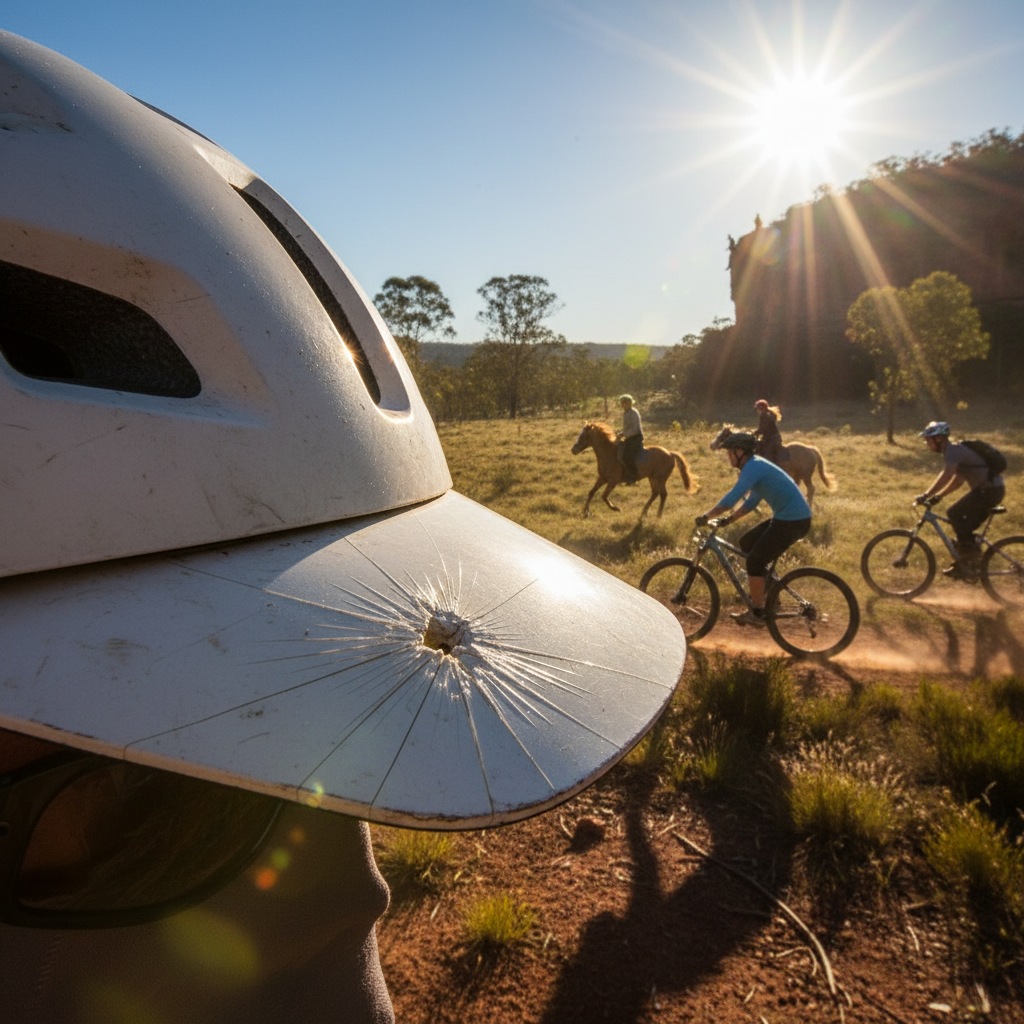
Brittleness: Within weeks or months, especially under constant UV bombardment and heat cycles (hot days, cooler nights), the plastic becomes brittle. It loses its flexibility and becomes prone to cracking and shattering. A cracked brim offers less shade and can become a hazard itself if pieces break off.
Discolouration & Weakening: UV rays break down the polymer chains in plastics. You'll see cheap brims turn yellow or chalky. This isn't just cosmetic; the material structure is compromised, making it weaker and less effective.
Heat Stress: Our summer temperatures can soar. Cheap plastics can warp, lose their shape, and become even more brittle when subjected to prolonged, high heat. A brim that loses its curvature loses its optimal shading ability.
Think about it: Are you going to replace your sun protection every few months? That's what you'll likely be doing with a cheap option, costing you more in the long run and providing inconsistent protection.
2. Inadequate Design and Coverage
Even if a cheap brim survives the elements, its design might be fundamentally flawed for our conditions:
Insufficient Shade: They are often too short or too narrow. They might cover your forehead but leave your ears, cheeks, or the sides of your face exposed to direct sun. This is where burns frequently occur. Our sun comes from above, but it also bounces off surfaces and hits from angles. You need comprehensive coverage.
Poor Fit and Attachment: Cheap brims might not integrate well with your helmet, leading to gaps where sun can sneak through. They might be tricky to attach securely, or the attachment points might be weak and break easily. A brim that shifts or falls off is useless.
3. Lack of Australian Standards Compliance
Reputable safety gear sold in Australia is tested to meet specific standards. While a brim itself might not be a primary safety device like the helmet, its ability to provide UV protection is crucial.
No UV Rating: Cheap brims rarely, if ever, come with any indication of their UV protective qualities (like UPF rating for fabrics, or specific UV resistance for plastics).
Questionable Manufacturing: Without traceable manufacturing processes or adherence to standards, you have no guarantee of quality, durability, or even the safety of the materials used.
What to Look For in a Quality Helmet Brim
So, if cheap isn't the way to go, what should you prioritise? Focus on features that directly combat our Australian conditions and ensure longevity.
1. UV-Resistant Materials
This is non-negotiable. High-quality brims are made from plastics specifically formulated to withstand prolonged UV exposure and heat. These materials:
Maintain Integrity: They resist becoming brittle, cracking, or warping even after years of use.
Retain Colour and Shape: They stay functional and look presentable.
Offer Proven Protection: While not a direct UPF rating like fabric, the material choice indicates a commitment to durability against the elements.
2. Superior Design and Coverage
Look for brims that are designed with Australian sun in mind:
Generous Brim Length: A wider and longer brim offers more shade to your face, ears, and neck. This is critical for preventing sunburn and long-term damage.
Angled Design: The curve and angle of the brim should maximise shade even when the sun is at slightly different angles. It should be designed to work with your helmet, not just attach to it.
Secure and Integrated Fit: The brim should attach firmly to your helmet without obstructing your vision or creating uncomfortable pressure points. Ideally, it should look like a natural extension of the helmet.
3. Durability and Longevity
A good brim is an investment. It should:
Withstand Impacts: Not just UV, but the occasional bump or scrape that comes with outdoor work or activity.
Be Easy to Clean: Dust, sweat, and grime are part of the job or hobby. A brim that’s easy to wipe down will last longer and stay more hygienic.
Outlast Multiple Seasons: You want something that will see you through multiple summers, not just a few months.
4. Proven Track Record and Ease of Installation
Look for brands that have a reputation for quality in harsh environments. Additionally, consider how easy it is to attach.
Simple Installation: A complicated or fiddly installation process is a red flag for poor product design. We offer straightforward installation guides to make it easy.
Compatibility: Ensure the brim is designed to fit the type of helmet you use (e.g., industrial, construction, cycling, mining).
A Quick Comparison: What to Expect
| Feature | Cheap Helmet Brim | Quality Helmet Brim |
|---|---|---|
| Material | Generic, non-UV-stabilised plastic | UV-stabilised, durable polymers |
| UV Resistance | Poor, becomes brittle and cracks | Excellent, maintains integrity & shape |
| Heat Tolerance | Warps, degrades | Withstands high temperatures |
| Shade Coverage | Minimal, often inadequate | Extensive, designed for maximum shade |
| Durability | Low, prone to breakage | High, built for tough environments |
| Lifespan | Months | Years |
| Price | Very low | Moderate to High (value for money) |
| Reliability | Unreliable | Trusted, consistent protection |
Don't Gamble with Your Skin: Investing in Protection
When it comes to sun protection, especially in Australia, compromise is a false economy. The few extra dollars you spend on a quality helmet brim are repaid many times over in consistent, reliable protection against skin damage and cancer. It's about peace of mind, knowing you're covered even when the sun is at its fiercest.
Your Checklist for a Smart Purchase:
Is the material visibly robust and designed for UV exposure? (Look for dense, non-chalky plastic.)
Does the brim offer significant coverage for your face, ears, and neck? (Check its dimensions.)
Does it claim to be UV-resistant or made from high-grade polymers?
Is it designed to securely and easily attach to your specific helmet type?
Does the manufacturer have a reputation for durable work/outdoor gear?
How to Get the Right Brim for Your Helmet:
1. Identify Your Helmet Type: Know if you’re using a construction helmet, a mining helmet, a cycling helmet, etc.
2. Research Compatible Brims: Look for brims specifically designed for your helmet’s make and model.
3. Check Material Specification: Prioritise UV-stabilised, outdoor-grade materials.
4. Assess Coverage: Visually inspect (or find reviews detailing) the shade provided. Longer and wider is generally better.
5. Consider Installation: Review installation instructions to ensure it’s straightforward.
6. Check for Australian Standards Compliance (where applicable): While a brim isn't a helmet, material quality is paramount.
7. Invest: Buy from a reputable supplier. We offer a range of high-quality products designed for Australian conditions.
The Bottom Line
Our Australian sun demands respect. Your safety gear should too. A cheap helmet brim might seem like a quick fix, but it’s a flimsy defence against a powerful threat. Investing in a quality helmet brim means choosing durable materials, intelligent design, and reliable sun protection. It's about working and playing smarter, safer, and healthier under our unique Australian sky. Don't let a poor-quality brim be your downfall. Explore our range of high-performance helmet brims designed to stand up to the heat and the UV. If you have questions about installation or product selection, our FAQ is a great resource, or check out our blog for more insights.