
Beyond the Burn: Protecting Your Skin and Eyes When Wearing a Helmet in the Australian Sun
Outdoor workers and athletes in Australia face relentless UV. Find out why your helmet isn't enough and how to get proper sun protection.
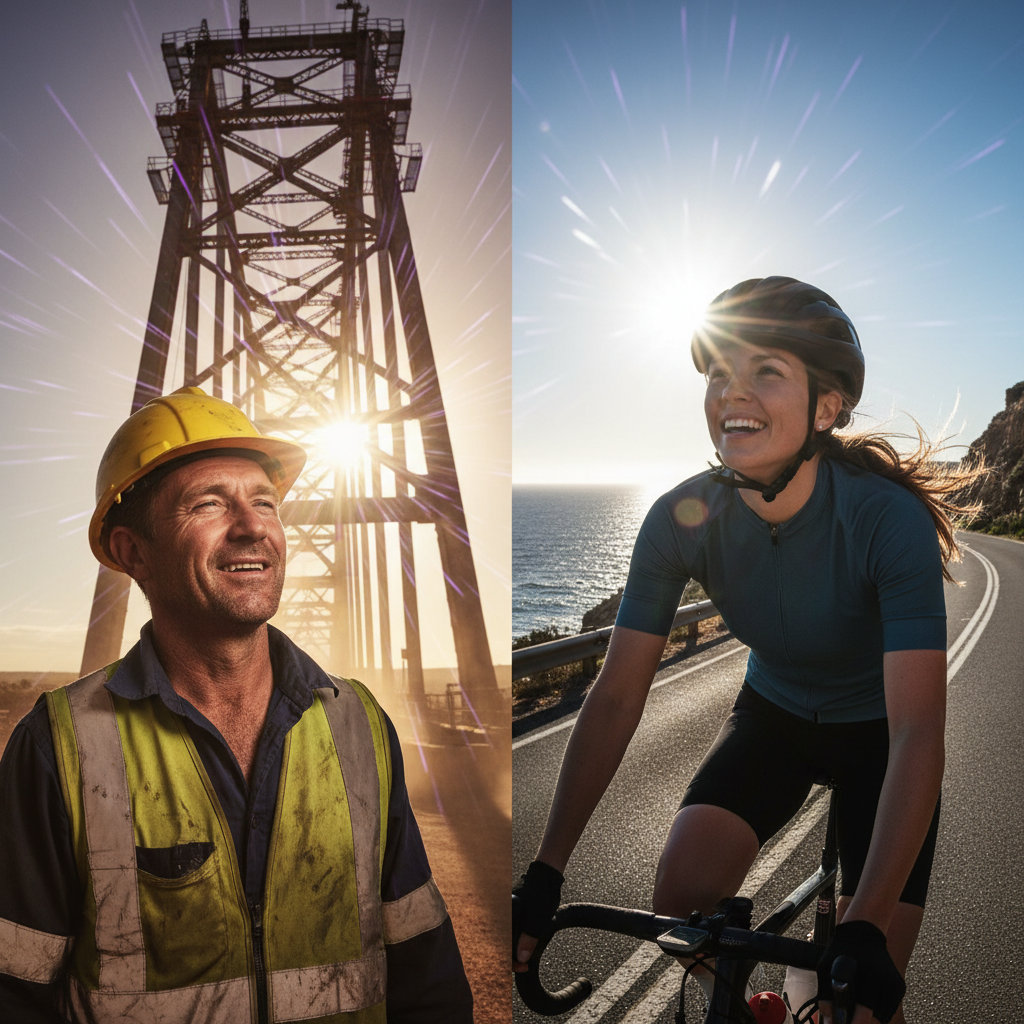
Beyond the Burn: Protecting Your Skin and Eyes When Wearing a Helmet in the Australian Sun
Australia. Beautiful one day, dangerously sunny the next. If your work or your passion takes you outdoors, especially under the glare of the Aussie sun, you already know about heat. But are you truly aware of the daily UV bombardment you're copping, even when you're wearing a helmet?
Many people assume that wearing a hard hat, a bike helmet, or any protective headgear automatically shields them from the sun. It's a logical thought, but it's a dangerous assumption. Helmets are designed for impact protection, not comprehensive UV defence. They cover your skull, yes, but what about your face, neck, and ears? And even the part of your head they cover can still be exposed to reflected UV radiation and heat buildup.
The Unseen Enemy: UV Radiation in Australia
We live on a continent that’s a bit too close to the sun for comfort. Our UV levels are consistently high, often reaching hazardous levels for much of the year, especially during peak daylight hours. The UV Index is a vital tool, and frankly, anything above 3 warrants protection. In many parts of Australia, it regularly soars into the 7-10+ range, classifying it as high to extreme. And those long summer days? They’re just more opportunities for damaging UV rays to do their worst.
Outdoor workers – think builders, roofers, farmers, tradies, surveyors, landscapers – are on the front lines of this daily assault. Outdoor athletes – cyclists, runners, cricketers, surfers, hikers – are no different. You’re out there for hours, day after day. The cumulative effect of this UV exposure is no joke. It leads to premature skin ageing, sunspots, and significantly increases your risk of developing skin cancer, including the deadliest form, melanoma. Your eyes are also at risk of cataracts and macular degeneration.
Why Your Helmet Isn't Enough
Let's get real. A helmet has gaps. It might have a peak or a short brim, but it's rarely designed to cover your entire face, ears, or the back of your neck. Gravity works against you too – UV rays can reflect off surfaces like concrete, sand, or water, bouncing up onto the underside of your helmet and potentially hitting exposed skin. Heat buildup under a helmet can also lead to discomfort, which can be distracting and, ironically, lead to removing protective gear.
Consider this:
Facial Exposure: Your forehead, nose, cheeks, and ears are prime targets for UV damage. These areas are often the first to show signs of sun ageing and are common sites for skin cancers.
Neck and Ears: The back of your neck and your ears are notoriously vulnerable. Many helmets offer minimal protection here, leaving them exposed for extended periods.
Reflected UV: Surfaces like bitumen, sand, and even water are highly reflective. UV rays can bounce off these surfaces and reach areas that might seem shaded by your helmet.
Heat and Discomfort: While not directly UV, the heat trapped under a helmet can be intense in Australia. This discomfort can lead to fatigue and a reduced ability to concentrate on safety, potentially leading to errors or the removal of the helmet altogether.
The Real Risks for Australian Outdoor Professionals and Athletes
For Outdoor Workers:
Skin Cancer: This is the big one. Statistics show that skin cancer is one of the most common work-related illnesses for outdoor workers in Australia. Repeated, unprotected UV exposure is the primary cause.
Premature Ageing: Looking older before your time with wrinkles, leathery skin, and age spots is a common consequence.
Eye Damage: Long-term UV exposure increases the risk of developing cataracts and pterygium (a growth on the eye).
Heat Stress: A helmet can amplify heat, leading to dehydration and heatstroke, impacting performance and safety protocols.
For Outdoor Athletes:
Skin Cancer: While perhaps less frequently discussed in a sporting context, the risk is just as real. Pro-cyclists, for example, have a higher incidence of melanoma.
Sunburn: Obvious, but often underestimated for its long-term cumulative damage.
Photokeratitis (Photonic Keratitis): This is essentially a sunburn of the cornea, causing pain, redness, and temporary vision loss. It’s like getting sand in your eyes, but much worse.
Reduced Performance: Overheating and discomfort from sun exposure can negatively impact an athlete's stamina and focus.
The Simple Truth: You Need More Than Just a Helmet
Your helmet is a crucial piece of safety equipment for impact. It's not a sun shield. To adequately protect yourself, you need a multi-pronged approach. Ignoring your sun protection simply because you're wearing a helmet is like wearing a seatbelt but neglecting to wear a helmet in a car – you’re addressing one risk while leaving yourself vulnerable to another.
Solutions: Practical Sun Protection for Helmet Wearers
This isn't about making your life harder; it's about making it safer and healthier for the long haul. Here’s what you need to do.
*1. Sunscreen is Your Best Friend (and it Needs Reapplication)
High SPF: Always use broad-spectrum sunscreen with an SPF of 30 or higher. SPF 50+ is even better for Australian conditions.
Water-Resistant: If you're sweating or working near water, make sure it's water-resistant.
Application: Apply it generously to all exposed skin – face, neck, ears, ears, lips, and any other exposed areas. Don't forget the back of your neck!
Reapplication: This is critical. Sweat, rubbing from your helmet, and time all break down sunscreen. Reapply every two hours, or more often if you're sweating heavily or swimming.
2. Cover Up Strategically
Long Sleeves and Trousers: If your work or sport allows, wear lightweight, breathable, UPF-rated clothing. This provides a physical barrier against UV rays.
Neck Gaiters/Buffs: A lightweight neck gaiter made of UPF fabric can be pulled up to cover your neck and lower face. They are far more effective than hoping your helmet’s rim provides coverage.
Wide-Brimmed Hats Under Helmets (Where Permissible): This is a tricky one. In some work environments, adding a hat under a helmet isn't allowed due to safety regulations or fit issues. However, for sports like cycling where some people wear a thin cycling cap, it can offer a little extra brim for your forehead. Crucially, never compromise helmet fit or safety regulations for extra sun protection. Always check your workplace safety guidelines.
*3. Eye Protection is Non-Negotiable
UV-Blocking Sunglasses/Eyewear: Your eyes need protection too. Choose sunglasses or safety glasses that block 99-100% of UVA and UVB rays. Look for UV 400 protection.
Cycling Glasses: For cycling, aerodynamic glasses can also offer significant facial coverage from sun and wind.
4. Seek Shade and Avoid Peak Times
Breaks: Take your breaks in shaded areas whenever possible.
Timing: If you have flexibility, try to schedule strenuous outdoor activities or work during the cooler parts of the day, outside of the 10 am to 3 pm peak UV period.
5. Consider Additional Helmet Accessories
While helmets themselves aren't built for sun protection, accessories can sometimes enhance it. For certain types of helmets (like some construction or mining helmets), you can often attach helmet brims or neck shades. These are specifically designed to extend coverage. It's essential to ensure any accessory you add does not compromise the helmet's structural integrity or its primary safety function. If safety standards are a concern, always check manufacturer guidelines and workplace regulations.
A Practical Checklist for Your Daily Routine
Here’s a quick rundown to keep you covered:
[ ] Apply broad-spectrum SPF 50+ sunscreen to all exposed skin (face, neck, ears, lips) before heading out.
[ ] Reapply sunscreen every 2 hours, and after sweating heavily.
[ ] Wear lightweight, UPF-rated clothing if possible.
[ ] Use a neck gaiter or buff to protect your neck and lower face.
[ ] Wear UV-blocking sunglasses or safety glasses (UV 400).
[ ] Take breaks in the shade.
[ ] If applicable and safe, consider helmet accessories like brims or neck shades.
[ ] Check the UV Index daily and adjust your protection accordingly.
Addressing Common Objections
“It’s too hot to wear all that extra stuff.”
Reality: The discomfort of dealing with sunburn, premature ageing, or skin cancer is far worse and much longer-lasting than a bit of extra fabric or sunscreen. Modern UPF clothing is designed to be lightweight and breathable. Strategic layering with lightweight, moisture-wicking fabrics can actually help regulate body temperature better than bare skin absorbing intense UV radiation.
“My helmet has a brim, that’s enough.”
Reality: As discussed, most helmet brims offer very limited coverage. They don't protect your ears, the sides of your face, or your neck. Relying solely on this is a gamble with your long-term health.
“I only get it done once a year, who cares?”
Reality: Sun damage is cumulative. Every bit of unprotected exposure adds up. Even short, frequent exposures without protection contribute significantly to your lifetime risk of skin cancer and ageing. Australia's UV levels mean that 'once a year' is almost daily.
“Sunscreen makes me break out.”
* Reality: There are countless formulations of sunscreen available now, including non-comedogenic and oil-free options specifically for sensitive or acne-prone skin. Trying a few different ones until you find one that suits your skin type is key. It’s a small price to pay for preventing skin cancer.
Enhancing Your Helmet's Protection: Da Brim Solutions
For many helmets, especially those used in outdoor work or cycling, the standard brim is insufficient. This is where dedicated accessories can make a significant difference. While Products are designed for impact, they leave your face and neck exposed. Accessories that extend the shade are vital. Products like specialized helmet brims can easily attach to existing helmets, dramatically increasing the shaded area around your face and neck. This gives you that crucial extra coverage without compromising the helmet's primary protective function. It's a simple, practical, and often cost-effective way to significantly boost your sun defence. Remember to always follow the How to Install instructions to ensure a secure fit and optimal protection. For more common questions, our FAQ page is a great resource.
Conclusion: Be Proactive, Not Reactive
Living and working in Australia means accepting the power of our sun. Your helmet is essential for safety, but it’s only one part of a comprehensive sun protection strategy. Don't wait for the burn, the wrinkles, or worse, a skin cancer diagnosis. By adopting practical habits like consistent sunscreen use, strategic clothing, and seeking additional protection like helmet brims, you can enjoy your outdoor life and work without sacrificing your long-term health. Stay safe, stay protected. For more tips and information, explore our Blog.
Remember, Products are for your head's protection from impact. Your skin and eyes need their own specific defence against the relentless Australian sun.